Small Business Bookkeeping: A Simple Guide to Staying Financially Organized

For many business owners, bookkeeping feels overwhelming — something to deal with later, during tax season, or when problems arise. But in reality, small business bookkeeping is the foundation of financial clarity.

Good bookkeeping doesn’t require advanced accounting knowledge. It requires consistency, organization, and simple systems that keep financial information clear and accessible.

This guide breaks down what small business bookkeeping really involves and how to manage it without stress.

What Is Small Business Bookkeeping?

How Poor Expense Tracking Hurts Small Business Cash Flow

Small business bookkeeping is the process of recording and organizing a business’s financial transactions, including:

  • Income and sales

  • Business expenses

  • Receipts and invoices

  • Payments and refunds

  • Financial records over time

The goal is to maintain accurate, up-to-date financial information that reflects how the business is performing.

How Poor Expense Tracking Hurts Small Business Cash Flow

Why Bookkeeping Matters for Small Businesses

budget calculator

Why Bookkeeping Matters for Small Businesses

Bookkeeping is not just for accountants. It directly impacts how a business operates.

Proper bookkeeping helps small businesses:

  • Understand cash flow

  • Track profitability

  • Prepare for taxes

  • Avoid financial surprises

  • Make confident decisions

Without bookkeeping, business owners often rely on assumptions instead of facts.

Common Small Business Bookkeeping Mistakes

Income and Expense Worksheet for Small Business Owners

Many small businesses struggle with bookkeeping due to habits like:

  • Delaying record updates

  • Losing or misplacing receipts

  • Mixing personal and business expenses

  • Relying on memory instead of records

  • Only reviewing finances once a year

These mistakes slowly create confusion and increase financial risk.

Income and Expense Worksheet for Small Business Owners

The Role of Receipts in Bookkeeping

digital receipts make returns faster

The Role of Receipts in Bookkeeping

digital receipts make returns faster

Receipts are the backbone of small business bookkeeping.

They:

  • Provide proof of expenses

  • Support tax deductions

  • Help verify transactions

  • Protect the business during audits

Without receipts, bookkeeping records are incomplete — even if the numbers look correct.

How Often Should Small Business Bookkeeping Be Done?

Why Digital Receipts Are Replacing Paper Receipts in 2026

Bookkeeping works best when done regularly.

Recommended routine:

  • Record income and expenses weekly

  • Review totals monthly

  • Reconcile records quarterly

Regular bookkeeping prevents last-minute panic and keeps financial data accurate.

Why Digital Receipts Are Replacing Paper Receipts in 2026

How Manage Receipt Supports Small Business Bookkeeping

How Manage Receipt Supports Small Business Bookkeeping

One of the hardest parts of bookkeeping is managing receipts and expense proof.

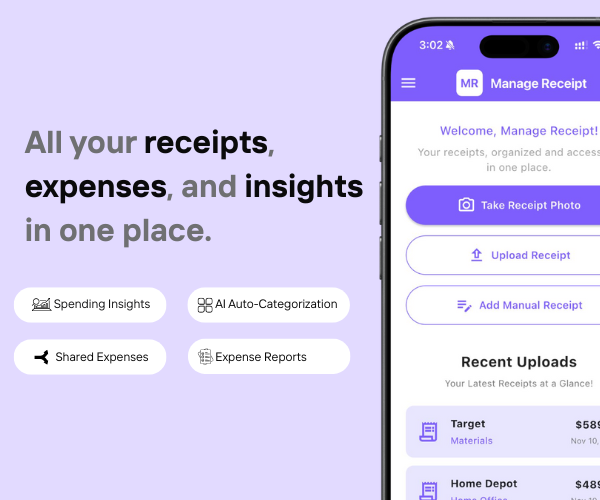
Manage Receipt simplifies small business bookkeeping by organizing receipts automatically.

With Manage Receipt, businesses can:

  •  Scan & Capture receipts instantly after purchases

  •  Store all expense proof in one secure place

  •  Find receipts easily during reviews or tax prep

  •  Support bookkeeping records with verified proof

  •  Stay organized year-round, not just at tax time

When receipts are organized, bookkeeping becomes faster and far less stressful.

Click Here to know more about how Manage Receipt helps Small Businesses

Conclusion

Small business bookkeeping doesn’t have to be complicated or time-consuming. With consistent habits, organized records, and the right tools, bookkeeping becomes a source of clarity instead of stress.

By using tools like Manage Receipt to organize receipts and proof, small businesses can maintain clean records, prepare confidently for taxes, and make better financial decisions throughout the year.

Good bookkeeping isn’t about perfection — it’s about preparedness.

FAQs

Q1. Do small businesses really need bookkeeping?

Yes. Bookkeeping helps track finances accurately and supports better decision-making.

Q2. How often should bookkeeping be updated?

Ideally weekly or monthly to keep records accurate and manageable.

Q3. What happens if receipts are missing?

Missing receipts can lead to incorrect records, missed deductions, and audit risks.

Q4. Can bookkeeping be done without an accountant?

Yes. Many small businesses handle basic bookkeeping themselves using simple systems and tools.

Q5. How does Manage Receipt help with bookkeeping?

It organizes receipts digitally, making bookkeeping records easier to verify and maintain.
app screens

Peace of Mind with Every High-Value Purchase

app screens

From smartphones to air conditioners, big purchases come with big responsibilities. With Manage Receipt, you can stop worrying about lost receipt. Whether you’re requesting a refund or sending a product for repair, your receipts are always there when you need them.