Tax Management for Small Business: A Simple Guide to Staying Compliant and Stress-Free

For many small business owners, tax season feels stressful, rushed, and overwhelming. But in most cases, the problem isn’t taxes themselves — it’s poor tax management throughout the year.

Tax management for small business is about building simple habits and systems that make taxes predictable instead of painful.

This guide explains what tax management really means, common mistakes, and how small businesses can stay prepared year-round.

What Is Tax Management for Small Business?

tax management

Tax management is the process of organizing, tracking, and preparing financial information so tax filing becomes easier and more accurate.

It includes:

  • Tracking income and expenses

  • Keeping proof of deductions

  • Organizing receipts and records

  • Reviewing finances regularly

  • Staying compliant with deadlines

Good tax management turns tax season into a routine task — not a crisis.

tax management

Why Small Businesses Struggle With Tax Management

budget calculator

Why Small Businesses Struggle With Tax Management

Many small businesses face tax issues due to:

  • Missing or lost receipts

  • Poor expense tracking

  • Last-minute record collection

  • Mixing personal and business expenses

  • Relying on memory instead of documentation

These problems build up quietly and only surface when it’s time to file.

The Role of Records in Tax Management

income

Records are the foundation of effective tax management.

Proper records help:

  • Support tax deductions

  • Verify business expenses

  • Reduce audit risk

  • Prevent overpaying taxes

  • Answer accountant or auditor questions quickly

Without proof, even valid deductions can be lost.

income

Simple Tax Management Habits That Work

Simple Tax Management Habits That Work

Small businesses don’t need complex systems. These simple habits make a big difference:

  • Capture receipts as soon as you get them

  • Separate business and personal spending

  • Review expenses monthly

  • Categorize expenses consistently

  • Keep digital backups of all records

These habits reduce stress and improve accuracy.

Tax Management Helps Beyond Taxes

Smart New Year Goals Every Small Business Should Set in 2026

Good tax management also improves:

  • Financial clarity

  • Cash flow understanding

  • Budgeting accuracy

  • Business decision-making

Taxes become easier — and overall financial control improves.

Smart New Year Goals Every Small Business Should Set in 2026

How Manage Receipt Supports Tax Management for Small Business

How Manage Receipt Supports Tax Management for Small Business

If the issue is records, the solution is organization.

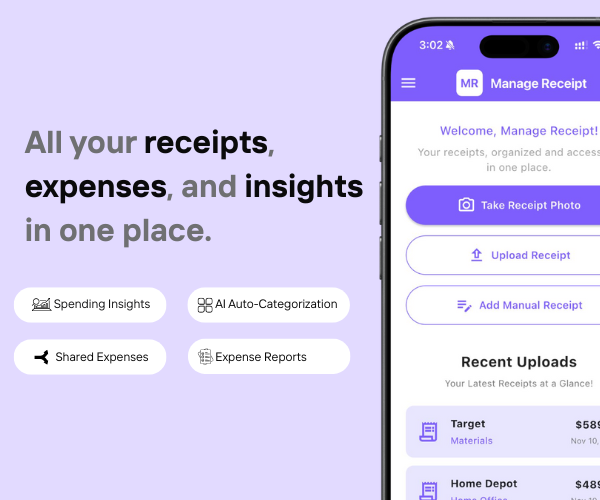
Manage Receipt helps businesses solve the root cause of tax stress by keeping documentation organized year-round.

With Manage Receipt, you can:

  •  Capture receipts instantly after every purchase

  •  Store all tax-related proof in one secure place

  •  Find documents in seconds

  •  Support deductions with clear records

  •  Stay prepared long before tax season starts

  • Tax reports for hassle-free filing.

When records are handled continuously, taxes stop feeling overwhelming.


Conclusion

Tax management for small business isn’t about complicated rules — it’s about organization, consistency, and good records.

By building simple habits and using tools like Manage Receipt to organize receipts and proof, small businesses can reduce tax stress, avoid costly mistakes, and stay compliant with confidence.

When records are ready, taxes stop being a problem — and start being a process.

FAQs

Q1. What is tax management for small business?

It’s the process of organizing financial records and expenses to make tax filing accurate and stress-free.

Q2. Why is tax management important for small businesses?

It helps prevent errors, reduce audit risk, and ensure businesses don’t miss valid deductions.

Q3. How often should small businesses manage tax records?

Ideally weekly or monthly to keep records updated and organized.

Q4. What happens if receipts are missing?

Missing receipts can lead to rejected deductions and inaccurate tax filings.

Q5. How does Manage Receipt help with tax management?

It stores and organizes receipts digitally, making tax preparation faster and more reliable.
app screens

Peace of Mind with Every High-Value Purchase

app screens

From smartphones to air conditioners, big purchases come with big responsibilities. With Manage Receipt, you can stop worrying about lost receipt. Whether you’re requesting a refund or sending a product for repair, your receipts are always there when you need them.