Providing health insurance to employees is a major expense for small businesses. To help reduce this burden, the government offers the Small Business Health Care Tax Credit, designed to support small employers who offer health coverage to their teams.
Understanding how this credit works — and how to prepare for it — can help small businesses reduce their tax liability while supporting employee well-being.

The Small Business Health Care Tax Credit is a tax incentive that helps eligible small businesses offset the cost of providing health insurance to employees.
Unlike deductions, which reduce taxable income, a tax credit directly reduces the amount of tax you owe — making it especially valuable for small businesses.


To qualify for the Small Business Health Care Tax Credit, a business generally must:
Have fewer than 25 full-time equivalent employees (FTEs)
Pay average annual wages below a specified threshold
Contribute at least 50% of employee health insurance premiums
Purchase coverage through a qualifying small business health exchange
Eligibility depends on meeting all required conditions, not just one.

The credit amount depends on several factors, including:
Number of employees
Average employee wages
Amount paid toward health insurance premiums
Eligible businesses may receive a credit covering a significant percentage of premiums paid, with higher credits available to the smallest, lowest-wage employers.


The Small Business Health Care Tax Credit is typically available for a limited number of consecutive tax years.
This means businesses should plan carefully to claim the credit during the years when it provides the greatest benefit.

Generally, eligible expenses include:
Employer-paid health insurance premiums
Coverage provided to full-time equivalent employees
Premiums paid under qualifying health plans
Accurate records are essential to support these expenses.


Claiming the Small Business Health Care Tax Credit requires clear documentation of premiums paid and related expenses.
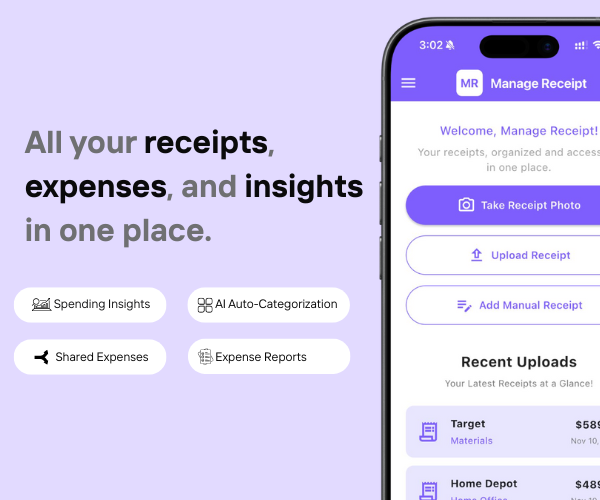
Manage Receipt helps small businesses stay organized by:
Manage Receipt can help by:
Capturing receipts instantly as you spend
Storing all receipt proof securely
Making it fast to find specific documents
Supporting clear records of eligible expenditures
Keeping documentation ready for tax preparation or audit
Whether you’re claiming a hiring credit or a research credit, organized documentation improves accuracy and reduces risk — and that makes claiming credits easier and more successful.
Click Here to know more about how Manage Receipt helps small businesses.
Click here to calculate your estimated tax.

The Small Business Health Care Tax Credit can significantly reduce the cost of providing health insurance — but only if businesses understand the rules and keep proper records.
By staying organized, tracking premium payments carefully, and using tools like Manage Receipt to manage documentation, small businesses can confidently claim this credit and maximize its benefits.
Supporting employees doesn’t have to come at the expense of financial stability.


From smartphones to air conditioners, big purchases come with big responsibilities. With Manage Receipt, you can stop worrying about lost receipt. Whether you’re requesting a refund or sending a product for repair, your receipts are always there when you need them.
© 2025 Manage Receipt. All Rights Reserved.