Simple Financial Systems Every Small Business Needs to Stay Organized and Profitable

Many small businesses struggle financially not because they lack sales — but because they lack systems.

Without clear processes for tracking money, organizing records, and reviewing finances, things quickly become messy and stressful.

The good news? You don’t need complicated accounting software to stay in control.

Here are simple financial systems every small business needs to stay organized, profitable, and stress-free.

A Consistent Expense Tracking System

Lost Receipts and Tax Penalties | Avoid Costly Business Mistakes

Every business needs a way to track spending clearly.

This system should:

  •  Capture expenses immediately
  •  Categorize transactions
  •  Store proof (receipts)
  •  Allow easy reviews

Waiting until month-end almost always leads to errors.

Lost Receipts and Tax Penalties | Avoid Costly Business Mistakes

A Receipt Organization System

budget calculator

A Receipt Organization System

Receipts support:

  •  Deductions
  •  Reimbursements
  •  Financial reports
  •  Audits

Paper systems fail quickly. Digital systems keep proof safe and searchable.

A Regular Financial Review Routine

You don’t need daily tracking — but you do need consistency.

Simple routine:

  • Weekly quick expense check
  •  Monthly financial review
  •  Quarterly goal check

This keeps problems small and manageable.

A Separate Business Finance Structure

How to Create an Expense Report | Step-by-Step Guide for Businesses

A Separate Business Finance Structure

Every business should separate:

  •  Business bank account
  •  Business card
  •  Business expenses

This creates cleaner records and easier tax filing.

A Budgeting & Planning System

5 Ways AI Can Accelerate Expense Management | Smart Finance

Planning prevents surprises.

Track:

  • Monthly expenses
  •  Expected income
  •  Upcoming large costs
  •  Taxes

This improves cash flow stability.

5 Ways AI Can Accelerate Expense Management | Smart Finance

How Manage Receipt Makes Expense Management Easier

How Manage Receipt Makes Expense Management Easier

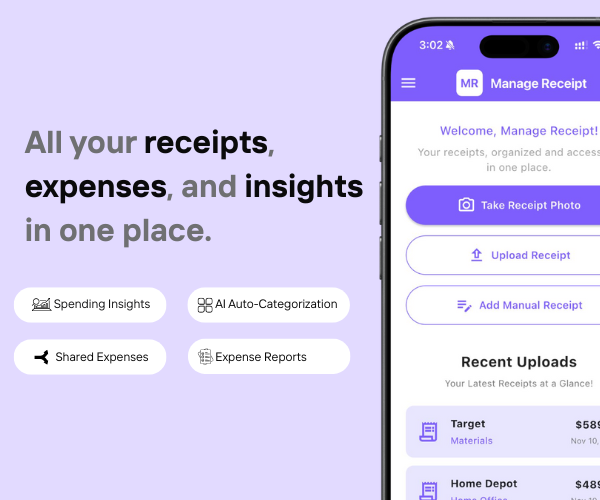
One of the easiest ways to build strong financial systems is automating receipt organization.

Manage Receipt helps small businesses:

  • Capturing and storing all business expense receipts
  •  Keeping proof of expenses organized

  •  Supporting clean bookkeeping and reporting

  •  Making it easier to show consistent business activity

  •  Helping separate personal and business spending clearly

When expenses are visible and organized, cash flow becomes predictable and controllable.

Click Here to know more about how Manage Receipt helps small businesses

Conclusion

Strong financial systems don’t need to be complex — they just need to be consistent.

By tracking expenses regularly, organizing receipts digitally, reviewing finances, and separating accounts, small businesses gain clarity and control.

Tools like Manage Receipt simplify the hardest part — keeping receipts and expense proof organized — making strong financial systems easy to maintain.

Good systems create strong businesses.

FAQs

Q1. Do small businesses really need financial systems?

Yes — systems prevent chaos, errors, and cash flow issues.

Q2. What’s the most important financial system to start with?

Expense tracking and receipt organization.

Q3. How often should finances be reviewed?

Weekly or monthly is ideal.

Q4. Are digital records better than paper?

Yes — they’re safer, searchable, and easier to manage.

Q5. How does Manage Receipt help small businesses?

It automates receipt capture and organization.
app screens

Peace of Mind with Every High-Value Purchase

app screens

From smartphones to air conditioners, big purchases come with big responsibilities. With Manage Receipt, you can stop worrying about lost receipt. Whether you’re requesting a refund or sending a product for repair, your receipts are always there when you need them.