




Bookstore Owner Expenses: New vs. Used Inventory Accounting

Why New and Used Inventory Need Separate Tracking

Cost basis works completely differently for each. New books have a clear wholesale cost from your distributor, while used books often have a much lower, sometimes negligible, cost basis depending on how you acquired them.

Margins vary significantly between the two categories. Used books frequently carry a much higher margin percentage than new titles, so blending the two together hides which side of your business is actually more profitable.

Acquisition methods create different documentation needs. A new book purchase comes with a standard invoice, while a used book acquired through trade-in or buyback needs its own kind of record to establish cost basis.

Tracking New Inventory Costs

Tracking New Inventory Costs

Distributor and publisher invoices are your primary cost record. Save every invoice showing quantity, wholesale price, and any shipping costs, since these numbers establish your cost basis for new titles.

Returns and stock rotation programs need their own tracking. Many distributors allow returning unsold new books for credit, and this process should be documented separately from your original purchase records.

Freight and shipping costs should be added to inventory cost. Rather than treating shipping as a separate expense, it’s generally more accurate to fold it into your overall cost basis for that inventory batch.

Tracking Used Inventory Costs

Cash buybacks need an immediate, itemized record. When you pay a customer cash for used books, log the amount paid, the titles acquired, and the date, since this cash outflow establishes your cost basis.

Store credit trade-ins require a different kind of tracking. If customers trade books for store credit rather than cash, this creates a liability on your books until that credit is redeemed, not an immediate cash expense.

Bulk acquisitions like estate sales need a single documented cost basis. When you buy a large used collection for one lump sum, you’ll need to estimate a reasonable per-item or per-category cost basis for your records.

Books with no clear acquisition cost still need a value assigned. Occasionally, used inventory arrives through donations or unclear sourcing, and even then, a conservative estimated value should be recorded for inventory accuracy.

Store Overhead: What's Shared Between Both

Store Overhead: What's Shared Between Both

Rent, utilities, and staff wages apply to the whole store. These overhead costs generally shouldn’t be split between new and used inventory, since they support the business as a whole rather than one category specifically.

Point-of-sale and inventory management software is a shared cost. The system tracking both new and used titles is a single business expense, not something divided between the two categories.

Marketing costs may or may not need splitting. If you run a promotion specific to used books or a new release event, tracking that spend separately can help you evaluate which side of the business responds better to marketing.

Common Mistakes Bookstore Owners Make

Recording all inventory purchases in a single category. This makes it impossible to see whether your new or used book sales are actually driving your profit.

Forgetting to log cash buybacks the same day. A quick cash transaction for used books is easy to forget by the end of a busy day, leaving a gap in your cost basis records.

Not tracking store credit liabilities separately. Outstanding store credit from trade-ins is money you’ll eventually owe in merchandise, and it should be tracked as a liability, not ignored until redeemed.

Estimating bulk purchase costs inconsistently. Using a different method to value each estate sale or bulk buy makes your used inventory costs unreliable over time.

 Set a consistent formula for valuing bulk used book purchases, such as a flat percentage of estimated resale value. As a result, your cost basis stays consistent across every acquisition, not just your memory of what felt fair at the time.

Let Manage Receipt Track Your Business-Side Expenses

Let Manage Receipt Track Your Business-Side Expenses

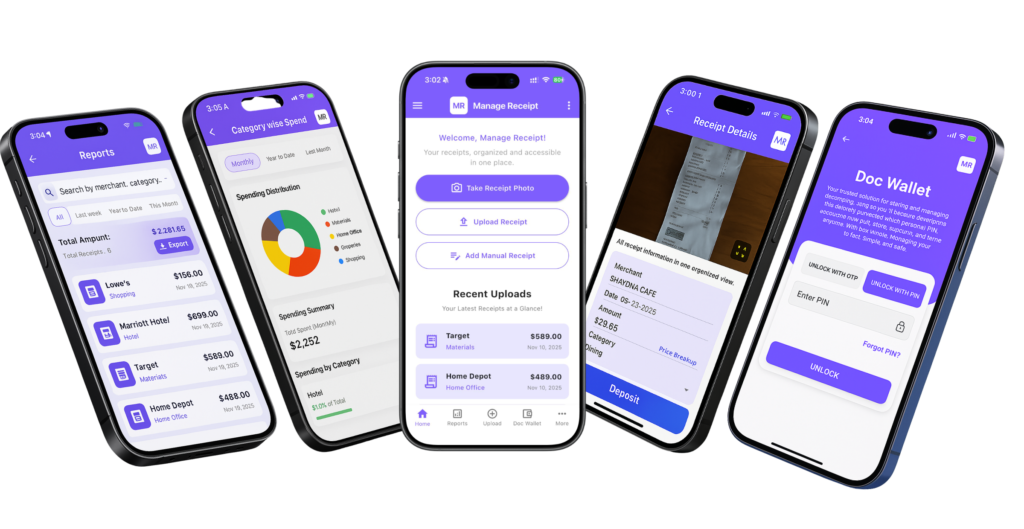
Manage Receipt scans and categorizes distributor invoices, buyback receipts, and bulk purchase records the moment you photograph them. Therefore, keeping new and used inventory costs cleanly separated becomes simple, giving you an accurate picture of your margins across both sides of the business.

With Manage Receipt, you can:

  • Upload and organize receipts in one secure place
  •  Keep digital proof for long-term access
  • Track spending and manage expenses easily
  • Maintain digital records for accounting and budgeting


Conclusion

paper-less receipt

New and used books might sit on the same shelves, but they need to live in separate worlds in your books. One comes with a clean distributor invoice and a predictable margin; the other comes from cash buybacks, trade-ins, and estate sales that need their own kind of documentation to make sense later.

Set up separate categories from day one, log every buyback the same day it happens, and review your margins by category each quarter. That’s what turns two very different inventory streams into numbers you can actually trust when it’s time to see which side of the store is really paying the bills.
paper-less receipt

FAQs

Do I need to value used books individually or can I use a bulk estimate?

A bulk estimate is generally acceptable for large acquisitions like estate sales. However, individual cash buybacks should be logged at their specific paid amount for accuracy.

Should store credit from trade-ins be tracked as revenue?

No. Store credit issued to a customer is a liability, since it represents merchandise you'll owe them later. It becomes recognized differently once the credit is actually redeemed.

Can I deduct the cost of used books that never sell?

This depends on your inventory accounting method. Consequently, consult a tax professional about how to handle written-off or unsellable used inventory correctly.

Smart app for organizing receipts and expenses.

Manage Receipt is designed to simplify the way individuals and businesses manage their financial records. The app allows users to digitize receipts, organize expenses, and generate reports in one platform. With smart tools like receipt scanning, expense tracking, and bill reminders, users can easily monitor their spending and keep their financial data organized.