


Business Travel Expense Tracking: A Complete Trip Checklist

Why Business Travel Expenses Are Easy to Lose Track Of

Expenses happen across multiple cities and days in a row. Unlike a single local purchase, a trip generates receipts from different vendors, currencies, and time zones, all within a compressed window.

Small purchases blend into the background of a busy trip. A coffee before a meeting or a parking fee at the airport feels too minor to log in the moment. Therefore, these small costs add up unnoticed over the length of a trip.

Digital and paper receipts get mixed together. Some charges arrive by email, others print out as paper receipts, and a few are cash-only. Consequently, they end up scattered across an inbox, a wallet, and a hotel folder.

Before You Leave: Pre-Trip Tracking

Before You Leave: Pre-Trip Tracking

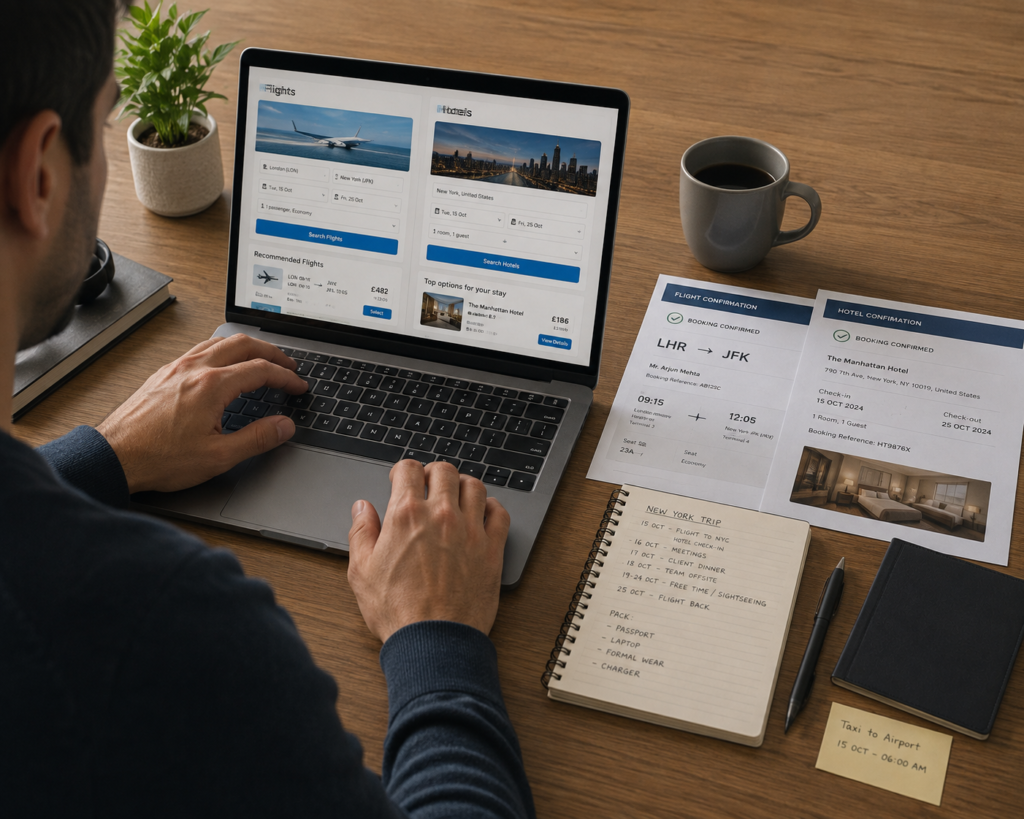
Save your flight and hotel booking confirmations immediately. These often qualify as receipts on their own, so save them the moment you book instead of waiting until after the trip.

Document the business purpose of the trip. A quick note on the client, project, or conference tied to the trip strengthens your documentation if any expense is ever questioned.

Check your company or personal travel policy for per diem rates. Knowing your meal and incidental limits ahead of time helps you track spending against a budget instead of guessing afterward.

During Travel: What to Track at the Airport

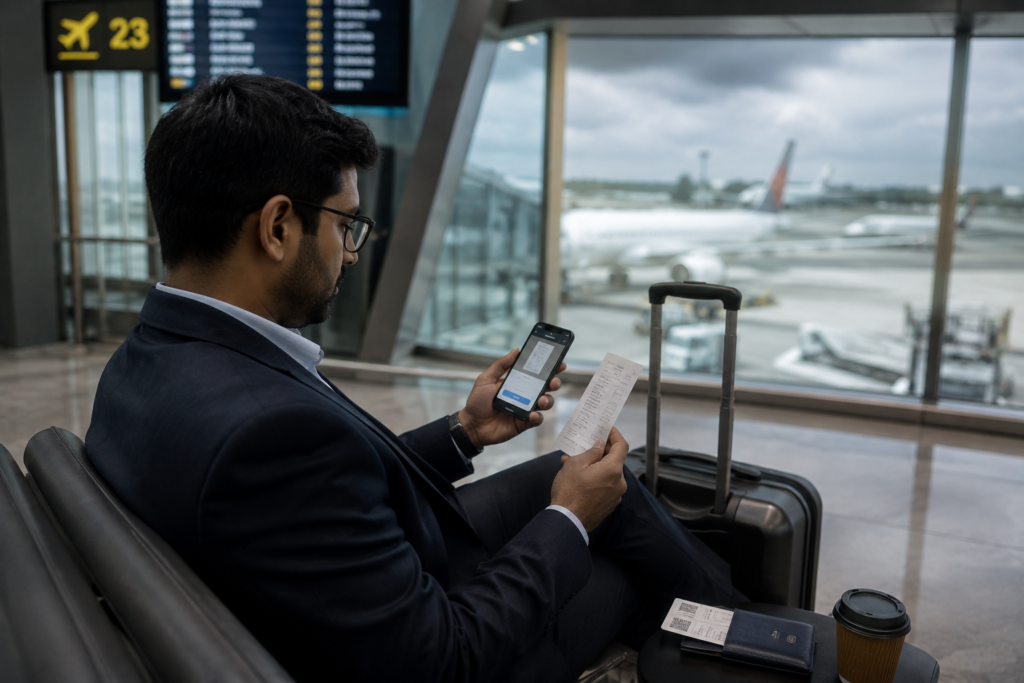
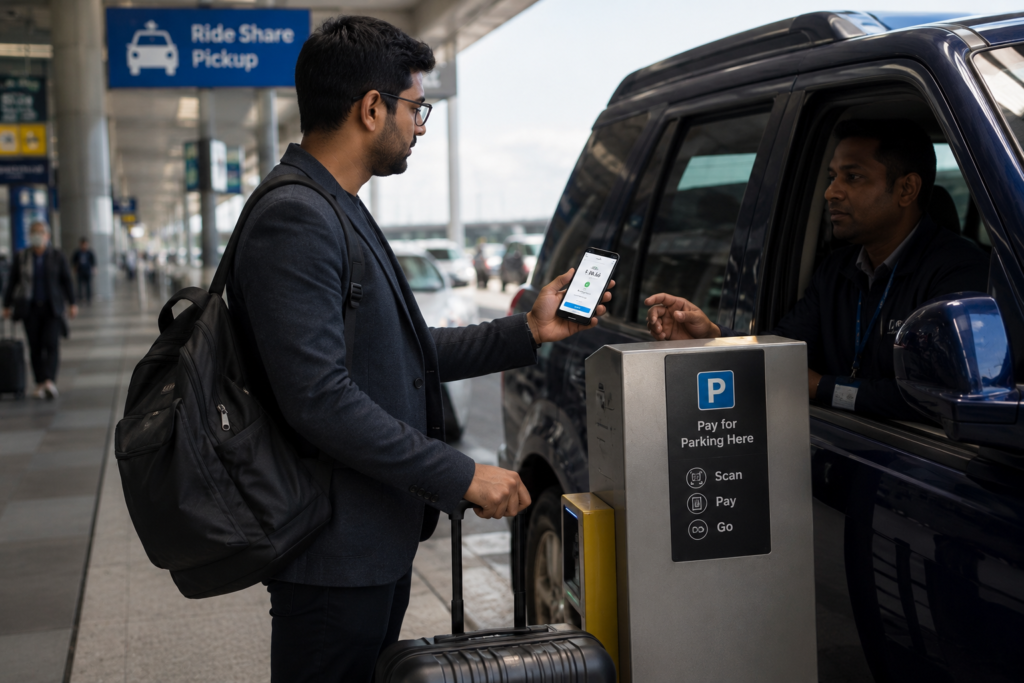
Save parking or rideshare receipts to and from the airport. These ground transportation costs are deductible and easy to forget once you’re focused on making your flight.

Photograph baggage fee receipts immediately. Airlines often email these separately from your boarding pass, so it’s easy to lose track of which trip a baggage charge belonged to.

Log airport meals and snacks as they happen. A quick bite before boarding is a legitimate travel expense, but it’s one of the easiest charges to forget by the time you land.

At Your Destination: Daily Expense Categories

At Your Destination: Daily Expense Categories

Lodging costs need a complete, itemized receipt. Hotel folios often include resort fees, parking, or Wi-Fi charges bundled with the room rate, so save the full itemized bill, not just the final total.

Ground transportation adds up across a multi-day trip. Rideshares, taxis, rental cars, and public transit between meetings should all be logged daily rather than reconstructed at the end of the trip.

Meals typically follow specific deduction rules. Business meals with clients or colleagues are usually only partially deductible, so keep the receipt and note who attended and the business purpose.

Incidentals are small but still count. Tips, laundry service, and other minor costs during a trip are deductible expenses that are easy to forget without daily tracking.

Client and Business Meeting Expenses

Save receipts for any client entertainment separately. Meals or activities with clients often have different deduction rules than your personal meals during the trip, so keep them in their own category.

Note attendees and business purpose for every client expense. This documentation is essential if a meal or event expense is ever reviewed, since the business connection needs to be clear.

Track conference or event registration fees separately from travel costs. These fees are usually invoiced ahead of time and easy to forget once you’re focused on the trip itself.

Let Manage Receipt Handle the Trip for You

Let Manage Receipt Handle the Trip for You

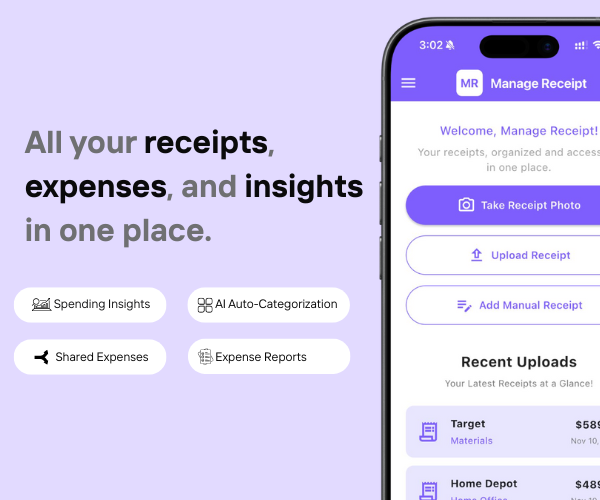
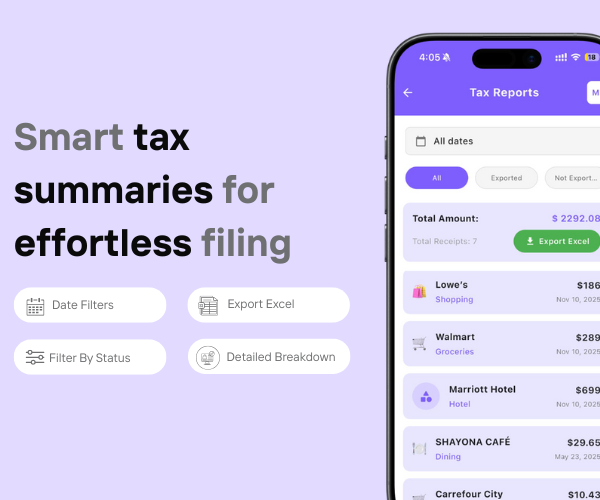
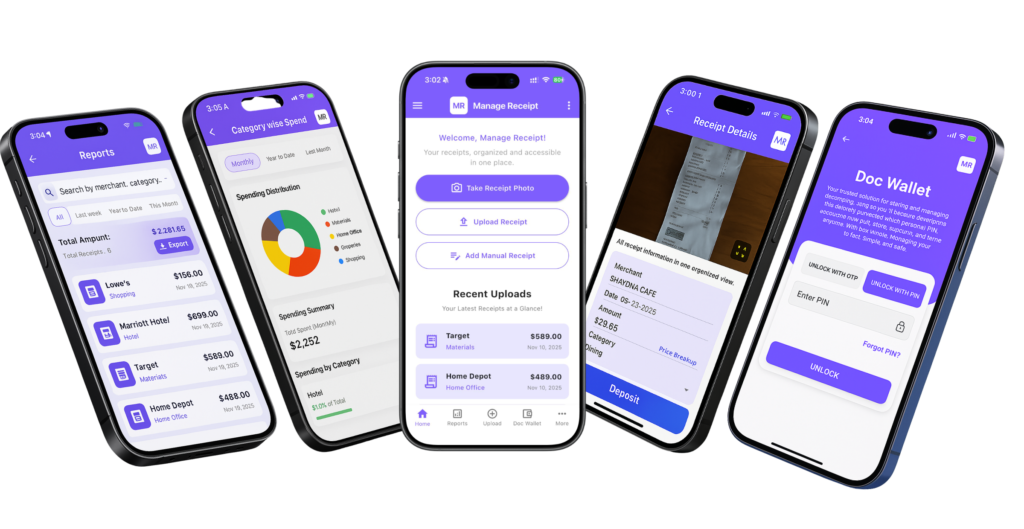
Manage Receipt scans and categorizes every receipt the moment you photograph it, whether you’re at the airport, in a taxi, or checking out of a hotel. Therefore, a multi-day business trip stays organized in real time, and reconciling expenses afterward takes minutes instead of hours of digging through a bag full of paper.

With Manage Receipt, you can:

  • Upload and organize receipts in one secure place
  •  Keep digital proof for long-term access
  • Track spending and manage expenses easily
  • Maintain digital records for accounting and budgeting


Conclusion

paper-less receipt

A business trip generates more receipts than most people expect, and the ones that get lost are almost always the small ones: airport parking, a quick meal, a tip at checkout. Tracking as you go, stage by stage, is what keeps a multi-day trip from turning into a reconstruction project once you’re back home.

Set up a dedicated folder before you even leave, photograph every receipt the moment you get it, and reconcile everything within 48 hours of returning. That habit is the difference between a trip that’s fully deductible and one where half the receipts never made it into your records.
paper-less receipt

FAQs

Are all meals during a business trip fully deductible?

No, typically not. Most business meals are only partially deductible, even during travel. However, keep every meal receipt regardless, since documentation still matters for the portion that does qualify.

Do I need to keep paper receipts if I have the credit card statement?

A credit card statement alone often isn't enough documentation. Therefore, keep the itemized receipt whenever possible, since it shows what was actually purchased, not just the total charged.

How should I track expenses paid in a foreign currency?

Save the original receipt and note the exchange rate or converted amount if your tracking system doesn't do this automatically. Consequently, this keeps your records accurate for both the original charge and its dollar value.

Smart app for organizing receipts and expenses.

Manage Receipt is designed to simplify the way individuals and businesses manage their financial records. The app allows users to digitize receipts, organize expenses, and generate reports in one platform. With smart tools like receipt scanning, expense tracking, and bill reminders, users can easily monitor their spending and keep their financial data organized.