


“I’ll organize it later.” It sounds harmless. You say it after a long day, after a busy week, after a hectic month. But in small business finance, “later” quietly becomes expensive.
Whether it’s delaying receipt management, ignoring expense tracking, postponing bookkeeping for small business, or avoiding tax preparation, that small delay compounds over time.
Here’s what it really costs.

When small business expense management is delayed, visibility disappears. You may record sales consistently, but if expenses aren’t tracked in real time, your understanding of profitability becomes distorted.
You underestimate recurring costs. You forget about subscriptions. You miss small operational purchases. Vendor payments blur together. Over time, these unrecorded or poorly categorized expenses create pressure on cash flow management.
This is why many businesses feel financially tight even when revenue is strong. The issue isn’t income — it’s lack of clarity.
Cash flow problems often begin with poor expense visibility, not poor sales.

The biggest damage shows up during tax season.
When receipt organization is postponed, tax preparation for small business becomes stressful. Instead of reviewing clean records, you start reconstructing months of financial history from memory and bank statements.
You search for missing receipts. You second-guess deductions. You rush bookkeeping updates. You worry about compliance.
Without organized documentation, legitimate deductions can be reduced or lost. And when records are incomplete, audit risk increases.
Strong tax outcomes don’t come from last-minute effort. They come from consistent organization throughout the year.

There’s also a psychological cost to disorganized finances.
When numbers aren’t clear, decision-making becomes hesitant. You delay hiring. You hesitate to invest. You question whether you can afford growth. Even simple financial decisions feel heavier.
This is where bookkeeping for small business becomes more than accounting — it becomes strategic clarity.
Organized financial records create confidence. Confidence supports better leadership. And better leadership drives better results.
The cost of “later” isn’t just financial. It’s mental.

Each postponed action seems insignificant on its own. A receipt isn’t logged. An expense isn’t categorized. A report isn’t reviewed.
But over months, those small delays accumulate into:
The danger of financial disorganization is that it doesn’t feel urgent — until it is.
By the time stress appears, the root cause has been building quietly for months.

The solution isn’t more effort. It’s reducing friction.
Financial organization becomes difficult when it relies on memory, paper systems, or manual spreadsheets. That’s why modern small business expense management increasingly depends on automation.
Using tools like Manage Receipt, businesses can capture receipts instantly, organize expenses in real time, and maintain clean records without waiting for the “right time.”
When receipt organization happens immediately, tax preparation becomes easier, cash flow management improves, and bookkeeping becomes consistent instead of reactive.
The goal isn’t perfection. It’s consistency.
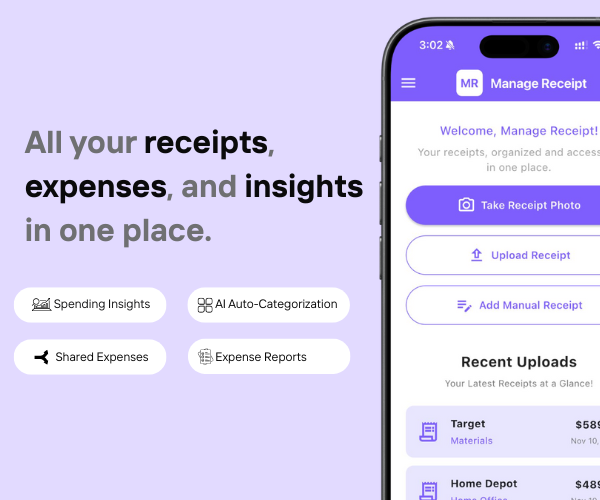
Manage Receipt is designed to simplify expense management for SMBs by addressing these common problems.
With Manage Receipt, SMBs can:
Capture receipts instantly to prevent loss
Store all receipts in one centralized system
Access proof quickly for approvals and audits
Improve visibility into spending
Reduce manual work and admin overhead
This helps SMBs build a cleaner, faster, and more reliable expense process.
Click Here to know more about how Manage Receipt helps small businesses.

The real cost of “I’ll organize it later” isn’t about paperwork. It’s about delayed clarity, weakened cash flow, stressful tax preparation, and reduced financial confidence.
Small businesses don’t fail because they lack ambition. They struggle when systems are weak.
Strong financial systems — especially around expense tracking and receipt organization — protect both profit and peace of mind.
Because in business finance, “later” is rarely free.

From smartphones to air conditioners, big purchases come with big responsibilities. With Manage Receipt, you can stop worrying about lost receipt. Whether you’re requesting a refund or sending a product for repair, your receipts are always there when you need them.


© 2025 Manage Receipt. All Rights Reserved.
