



Yes, in most cases. If you use the space primarily for business purposes, coworking space costs are generally deductible, similar to renting a traditional office.
However, the deduction depends on business use, not just location. What matters is whether the space is used regularly and primarily for work, rather than occasionally for a change of scenery.
Additionally, self-employed workers and small business owners benefit the most. A coworking space often serves as their only dedicated pl
ace of business, which strengthens the case for deducting coworking space costs in full.
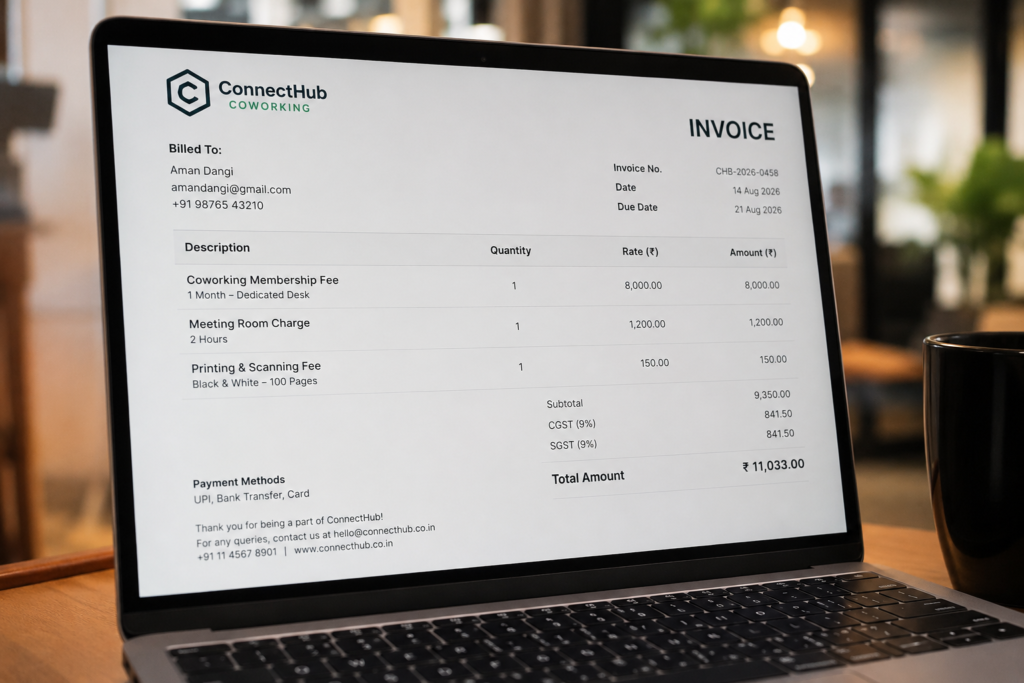
The base membership fee is usually the largest deductible portion. This covers your desk access, whether it’s hot-desking or a dedicated seat, and forms the core of your coworking space costs.
Meeting room bookings often qualify too. If you book a private room for client calls or team meetings, this cost is typically deductible as a business expense.
Furthermore, printing, scanning, and mailing services usually count. Many coworking spaces charge separately for these services, so keep these receipts distinct from your general membership invoice.
Add-on business services can qualify as well. Some spaces offer virtual mailbox addresses, phone answering services, or event space rentals, all of which are generally deductible when used for business.
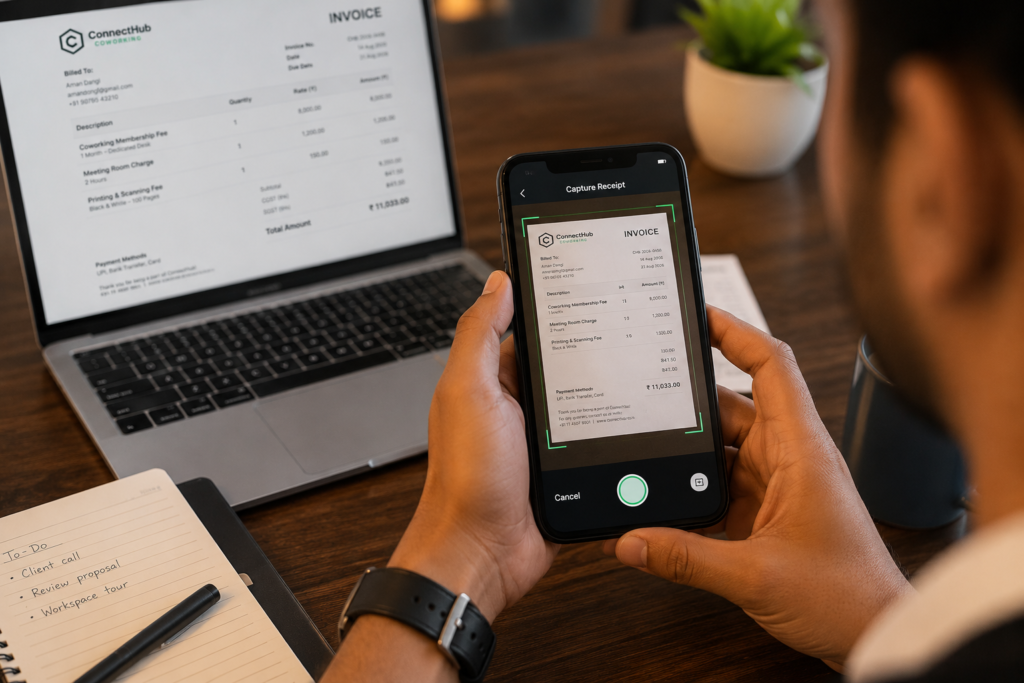
Save the monthly invoice, not just the payment confirmation. A detailed invoice showing what’s included in your membership tier provides better documentation than a generic payment receipt.
Therefore, keep meeting room and add-on receipts separate. Since these are billed differently than your base membership, keeping them distinct makes categorizing expenses easier at tax time.
Track your business-use percentage if usage is mixed. If you split time between business and personal use of the space, note the approximate percentage and keep it consistent across the year.
Additionally, note the business purpose for meeting rooms. A quick note about which client or project the room booking was for strengthens your documentation if it’s ever questioned.

You generally can’t claim both for the same space. If you’re paying for a coworking membership as your primary workspace, you typically can’t also claim a home office deduction for that same portion of work.
Nevertheless, some freelancers split time between both. If you work from home part of the week and a coworking space the rest, you may be able to claim a partial home office deduction alongside your coworking space costs.
Therefore, compare both options before deciding. Depending on your home office size and coworking membership cost, one option may offer a noticeably larger deduction than the other.

Team memberships work differently than solo desks. If you’re paying for multiple seats or a dedicated team room, each membership tied to an employee or contractor is generally deductible as a standard business expense.
Track costs per person when possible. Keeping individual invoices or a breakdown by team member makes it easier to justify the expense if your business ever scales down and you need to adjust the membership.
Growth-stage discounts and add-ons still count. Many coworking spaces offer volume pricing or bundled perks for growing teams, such as extra meeting room credits or dedicated storage. Therefore, these additions typically qualify under the same rules as your base membership.
Keep contractor and employee coworking costs separate from personal reimbursements. If team members expense their own coworking day-passes, track those as reimbursed employee expenses rather than folding them into your business’s direct coworking space costs.
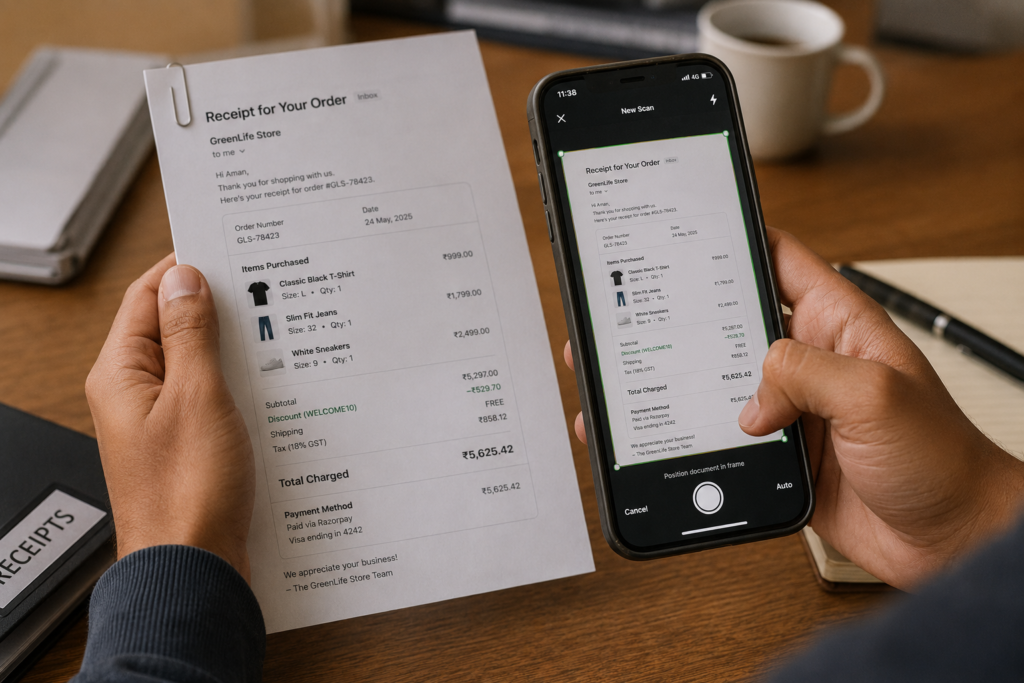
Manage Receipt scans and categorizes coworking invoices, meeting room receipts, and add-on service costs the moment you photograph them. Consequently, separating deductible coworking space costs from personal perks becomes simple, and your records stay organized and ready for tax season.
With Manage Receipt, you can:

The difference between these two emails comes down to one question: does it prove you actually paid? An order confirmation tells you your purchase went through the system. A digital receipt tells you the payment cleared, and it comes with the details to back that up.
Going forward, don’t assume the first email in your inbox is the one you need. Check for the payment breakdown, save both if you’re unsure, and let a receipt-scanning app handle the sorting so you’re never left searching for proof of purchase when it actually matters.
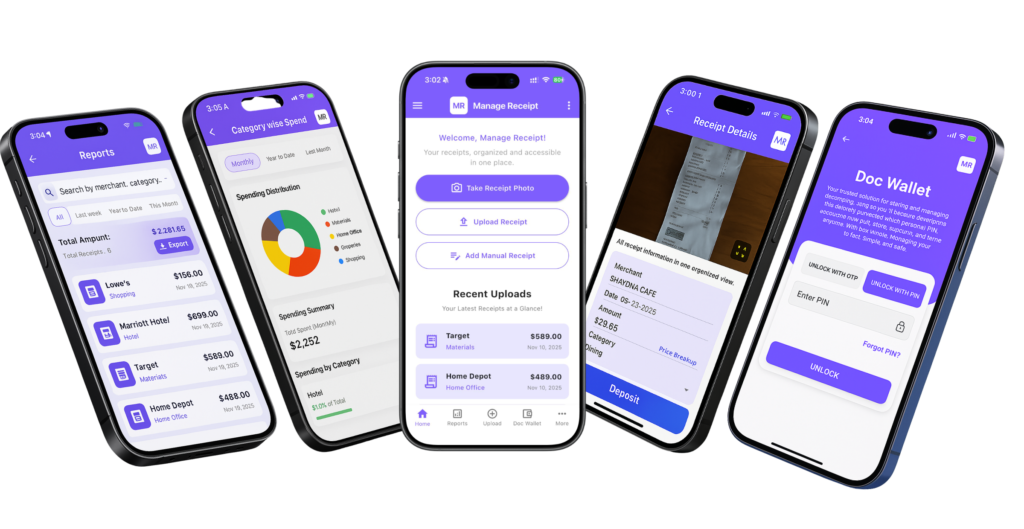
Manage Receipt is designed to simplify the way individuals and businesses manage their financial records. The app allows users to digitize receipts, organize expenses, and generate reports in one platform. With smart tools like receipt scanning, expense tracking, and bill reminders, users can easily monitor their spending and keep their financial data organized.


© 2025 Manage Receipt. All Rights Reserved.
