


Filing taxes for the first time as a small business owner can feel overwhelming. New forms, unfamiliar rules, and fear of making mistakes often create unnecessary stress.
The truth is, filing small business taxes for the first time doesn’t have to be complicated — if you approach it step by step and stay organized.
Here are 5 practical tips to help first-time small business owners file taxes confidently and avoid common mistakes.

Your tax obligations depend on how your business is structured.
Common structures include:
Sole proprietorship
Partnership
LLC
Corporation
Each structure has different filing requirements, forms, and deadlines. Knowing your structure early helps you file the correct forms and avoid penalties.

One of the most common first-time mistakes is mixing personal and business expenses.
Best practices:
Use a separate business bank account
Use a business debit or credit card
Clearly label business expenses
This makes tax filing cleaner, faster, and more accurate.

Expenses reduce your taxable income — but only if you can prove them.
Make sure you:
Track expenses consistently
Keep receipts for all business purchases
Organize receipts by category and date
Missing receipts often lead to missed deductions.

Missing deadlines can lead to penalties and interest.
Important steps:
Mark tax deadlines on your calendar
Know whether you need quarterly estimated taxes
Understand which forms apply to your business
Planning ahead prevents rushed, error-prone filing.

First-time tax filing doesn’t mean you have to do everything alone.
Consider:
Consulting a tax professional
Using reliable tax software
Asking questions early
Even a short consultation can prevent costly mistakes.

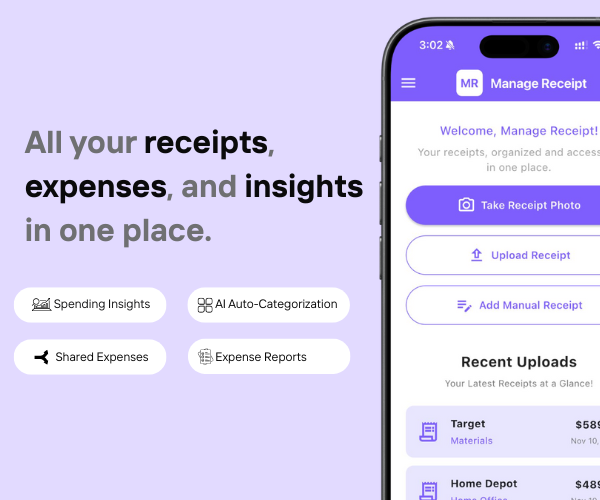
One of the biggest challenges in claiming credits is having organized proof — receipts, invoices, payroll records, and documentation of qualifying activities.
Manage Receipt can help by:
Capturing receipts instantly as you spend
Storing all receipt proof securely
Making it fast to find specific documents
Supporting clear records of eligible expenditures
Keeping documentation ready for tax preparation or audit
Whether you’re claiming a hiring credit or a research credit, organized documentation improves accuracy and reduces risk — and that makes claiming credits easier and more successful.
Click Here to know more about how Manage Receipt helps small businesses.
Click here to calculate your estimated tax.

Filing small business taxes for the first time can feel intimidating, but with the right preparation, it becomes manageable. By understanding your business structure, separating finances, tracking expenses, and staying organized, you can file confidently and correctly.
Using tools like Manage Receipt to organize receipts and expenses helps first-time business owners stay prepared, reduce stress, and avoid missing deductions.
Your first tax filing sets the foundation — build it right.

From smartphones to air conditioners, big purchases come with big responsibilities. With Manage Receipt, you can stop worrying about lost receipt. Whether you’re requesting a refund or sending a product for repair, your receipts are always there when you need them.


© 2025 Manage Receipt. All Rights Reserved.
