


The New Year is the perfect time for small businesses to reset their financial habits. Many businesses struggle not because of low sales, but because expenses aren’t tracked or controlled properly. Poor expense management leads to cash flow issues, missed tax deductions, and unnecessary stress.
The good news? Improving expense management doesn’t require complex systems — just the right habits and tools. Here’s how small businesses can start the New Year with better control over expenses.

Before planning ahead, look back.
Go through last year’s expenses and identify:
Unnecessary or recurring costs
Subscriptions you no longer use
High-spending categories
Expenses without proper records
This review helps you understand where money is being wasted and where savings are possible.

Running a business without an expense budget is risky.
For the New Year:
Set monthly limits for major expense categories
Allocate budgets for marketing, travel, tools, and operations
Plan emergency or buffer expenses
Clear budgets help prevent overspending and improve financial discipline throughout the year.

Many small businesses track expenses only during tax season — which creates chaos.
Instead:
Record expenses as they happen
Track even small cash and card payments
Review expenses weekly or monthly
Regular tracking keeps records clean and avoids last-minute stress.

Paper receipts get lost, fade, or tear — leading to missing expense proof.
Digital receipt management allows you to:
Store receipts securely
Retrieve proof instantly
Keep expenses organized by category or month
Stay prepared for audits and tax filing
This simple shift saves time and prevents financial confusion.

You don’t need a complicated budgeting system. Just set clear, simple monthly limits for:
Supplies
Marketing
Travel
Subscriptions
Client expenses
Tracking spending against each category helps you act before overspending happens.
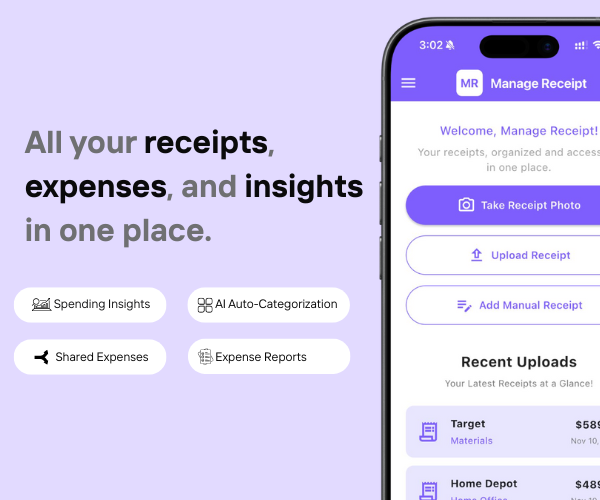
Managing expenses manually becomes harder as a business grows.
With Manage Receipt, small businesses can:
Scan and store receipts instantly
Organize expenses automatically
Find any receipt in seconds
Generate clean expense summaries
Keep records secure and accessible all year
By automating documentation, businesses can focus more on growth and less on paperwork.

The New Year offers a fresh opportunity to fix old financial habits. By reviewing past expenses, setting clear budgets, tracking spending regularly, and using digital tools like Manage Receipt, small businesses can gain better control, reduce unnecessary costs, and stay financially confident throughout the year.
Better expense management isn’t just a resolution — it’s a smart business move.

From smartphones to air conditioners, big purchases come with big responsibilities. With Manage Receipt, you can stop worrying about lost receipt. Whether you’re requesting a refund or sending a product for repair, your receipts are always there when you need them.


© 2025 Manage Receipt. All Rights Reserved.
