



The IRS expects taxes paid as income is earned. Employees have taxes withheld from every paycheck automatically. Freelancers, however, receive income with nothing withheld, so the IRS requires estimated payments instead.
Missing a payment can trigger a penalty. If you owe more than a set threshold at year-end and haven’t paid enough throughout the year, the IRS charges an underpayment penalty. Therefore, quarterly payments aren’t optional once you cross that threshold.
Both income tax and self-employment tax are included. Quarterly payments cover regular income tax plus Social Security and Medicare contributions. Consequently, the total often surprises freelancers who are new to self-employment.

Mark these dates now. Missing one means catching up with the next payment, plus potential penalties for the gap.
Notice the uneven gaps between quarters. Q1 and Q2 are only two months apart, while Q3 and Q4 stretch further. Therefore, don’t assume each payment is exactly three months after the last.
Weekends and holidays can shift the exact date. If a due date lands on a weekend or federal holiday, the deadline moves to the next business day. Consequently, always double-check the exact date each year rather than relying on memory.

Start with your expected annual net income. Estimate your total freelance income for the year, then subtract business expenses to find your net profit. This number is the foundation for your entire calculation.
Apply self-employment tax to that net profit. Self-employment tax covers Social Security and Medicare and applies on top of regular income tax. Moreover, this is the piece most new freelancers forget to budget for.
Add estimated income tax based on your bracket. Use your expected total income, including any freelance and non-freelance sources, to estimate your income tax bracket for the year.
Divide the total by four. Once you have a full-year estimate, divide it into four roughly equal payments. However, if your income is seasonal, you can adjust each quarter’s payment to match actual earnings instead.Rule of thumb: many freelancers set aside 25-30% of every payment they receive into a separate savings account earmarked for taxes. As a result, the quarterly payment is already sitting there when the deadline arrives.
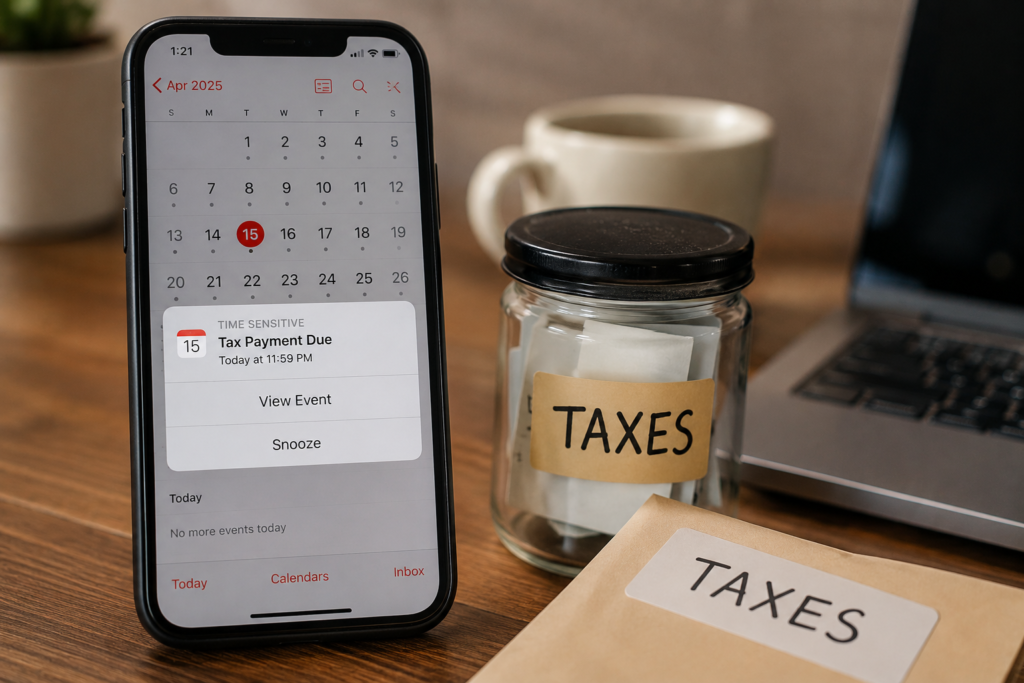
Set calendar reminders two weeks before each deadline. This buffer gives you time to review your numbers and make the payment without last-minute stress.
Save a fixed percentage from every payment you receive. Move money into a dedicated tax savings account as soon as a client pays you. Therefore, you’re never scrambling to find the funds on the due date.
Review your income and expenses monthly. A quick monthly check keeps your quarterly estimate accurate. Furthermore, it catches income spikes early, so you can adjust your next payment instead of getting hit with a penalty later.
Keep every receipt tied to a deductible expense. Lower net income means a lower quarterly payment. Consequently, consistent expense tracking directly reduces what you owe each quarter.

Paying based on last year’s income only creates risk. If this year’s income is significantly higher, you could underpay and face a penalty. Therefore, adjust your estimate as the year progresses rather than setting it once in January.
Forgetting state estimated taxes is a common gap. Many states require their own quarterly estimated payments in addition to federal ones. Nevertheless, this step gets missed often, especially by freelancers who are used to a single employer withholding everything.
Waiting until the deadline to calculate the payment leads to errors. Rushed calculations lead to underpayment or overpayment. Instead, calculate your estimate at least a week before the due date so you have time to adjust.
Not tracking mixed income sources causes confusion. If you freelance alongside a W-2 job, your withholding from that job affects how much you still owe quarterly. Consequently, factor in both income streams together, not separately.

Manage Receipt tracks every business expense as it happens, so your net income estimate stays accurate all year. Therefore, calculating each quarterly payment takes minutes instead of a scramble through months of receipts. Additionally, organized records make it easy to see exactly how much you’ve earned and spent before every deadline.
With Manage Receipt, you can:

Quarterly taxes stop being stressful once you treat them as a recurring habit instead of a surprise. Mark the four dates, set aside a percentage from every payment as it comes in, and review your numbers monthly instead of scrambling right before a deadline.
The freelancers who stay ahead of this aren’t doing anything complicated. They’re just consistent about tracking income and expenses year-round, so the calculation is already half done by the time each due date arrives. Build that habit once, and every quarter after gets easier.
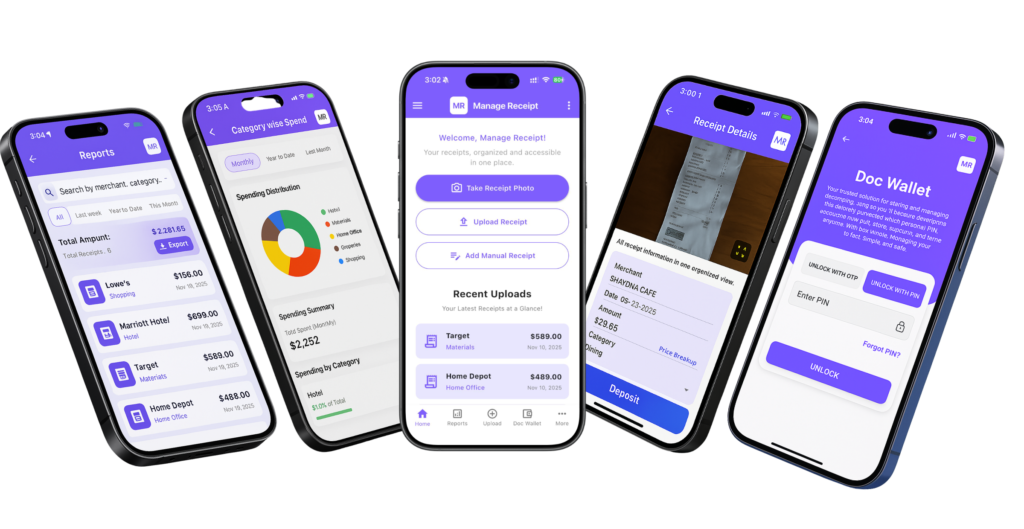
Manage Receipt is designed to simplify the way individuals and businesses manage their financial records. The app allows users to digitize receipts, organize expenses, and generate reports in one platform. With smart tools like receipt scanning, expense tracking, and bill reminders, users can easily monitor their spending and keep their financial data organized.


© 2025 Manage Receipt. All Rights Reserved.
