


Managing business expenses properly is essential for maintaining financial stability.
An organized expense tracking system allows businesses to monitor spending, identify
unnecessary costs, and maintain accurate financial records.
By keeping track of every transaction, businesses can make better financial decisions
and avoid unexpected budget issues. Digital tools make expense tracking easier by
automatically storing, categorizing, and organizing financial records in one place.
In this guide, you’ll learn how to use an income and expense worksheet properly and how digital tools like Manage Receipt can improve accuracy and simplify the entire process.

Tracking expenses helps individuals and businesses understand where their money goes and maintain better financial control.
Monitor spending to identify unnecessary expenses.
Maintain financial records for accounting and reporting.
Improve budgeting by analyzing spending habits.

Digital expense management systems allow businesses to track and store their financial records more efficiently.

Managing business expenses becomes easier when you follow these simple steps:
Record Every Expensen Document all transactions to maintain accurate financial records.
Organize Expenses by Category Separate expenses into categories such as travel, marketing, utilities, and office supplies.
Regular reviews help businesses identify unnecessary costs and improve financial planning.

Many businesses commit errors that impact financial accuracy, such as:
Failing to consistently track minor expenses A lot of businesses overlook small, everyday costs, influence the overall financial status.
Combining personal and business expenses Using a single account for both personal and business spending can lead to confusion.
Not properly categorizing expenses when costs are not grouped into categories such as travel, marketing, utilities.
Failing to conduct routine financial assessments Companies that do not regularly.

Even if physical receipts are unavailable, businesses can still track transactions through digital tools and bank records.
Store transaction details digitally
Use bank statements to verify purchases
Maintain secure financial backups.
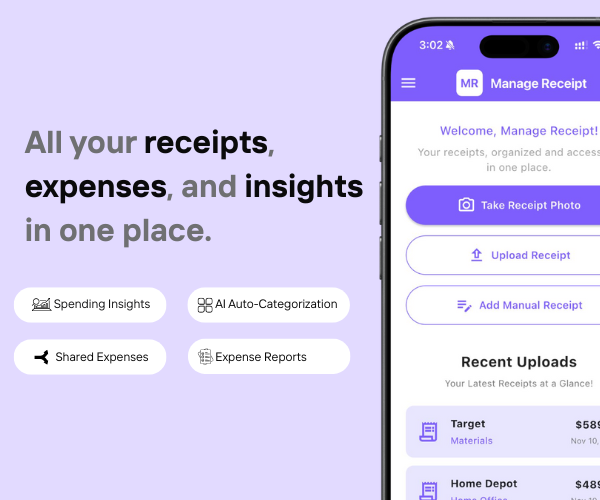
Manage Receipt makes expense tracking simple by allowing users to scan receipts, organize expenses, and generate reports in one easy-to-use platform. It also helps manage taxes, split bills, and store important documents securely. With everything in one place, users can track their finances quickly and stay organized:
Scan and save receipts instantly using the Smart Receipt Scanning feature.
Generate organized expense reports to better understand spending patterns.
Manage taxes more easily by keeping all expense records in one place.
Set bill reminders to ensure important payments are never missed.

Effective expense management is essential for maintaining financial stability in any business. By organizing financial records digitally, businesses can track spending, generate reports, and make better financial decisions.
Using digital tools like Manage Receipt simplifies expense tracking and ensures financial data remains organized and accessible.

Manage Receipt helps you keep all your financial records organized by using smart features designed to simplify expense management. From scanning receipts to tracking expenses and storing documents, the app keeps everything in one secure and accessible place.


© 2025 Manage Receipt. All Rights Reserved.
