


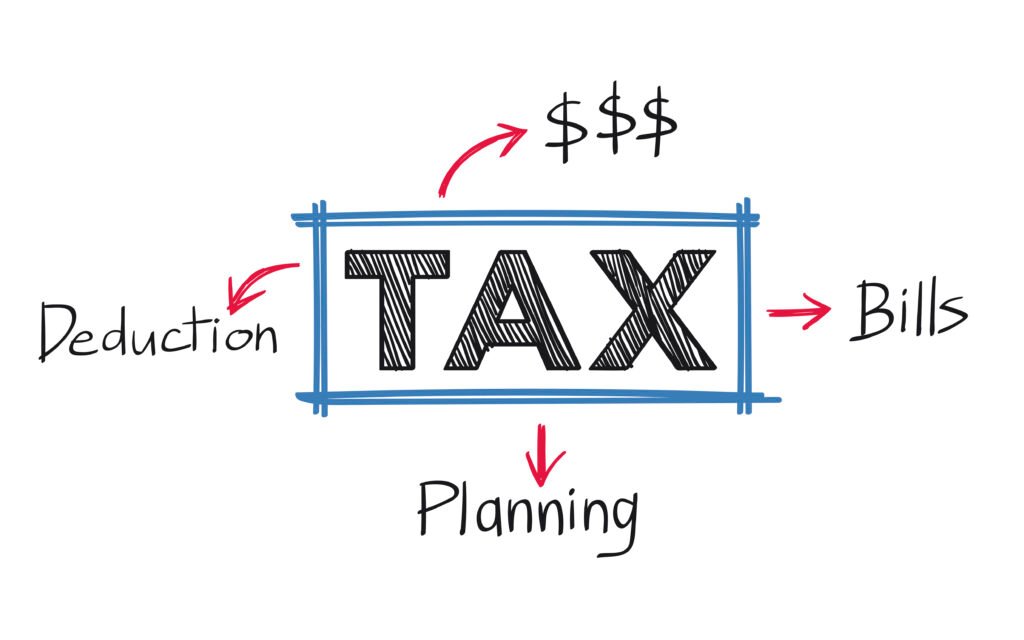
If you drive for Uber, Lyft, DoorDash, Instacart, Grubhub, Amazon Flex, or Spark, the IRS sees you as a self-employed business owner — even if it’s just a side hustle on weekends. That status comes with extra tax responsibilities, but it also opens the door to a long list of deductions that can significantly lower what you owe. Here’s a practical breakdown of the tax deductions every rideshare and delivery driver should know for 2026.

When a rideshare or delivery platform pays you, no taxes are withheld from your earnings. Instead, you’re responsible for reporting that income yourself, typically using Schedule C (Form 1040) to report your business income and expenses. If your net earnings from driving are $400 or more for the year, you’ll also need Schedule SE to calculate self-employment tax.
The upside of being self-employed is that you can subtract your business expenses from your earnings before calculating how much tax you owe. The more legitimate expenses you track, the lower your taxable income.
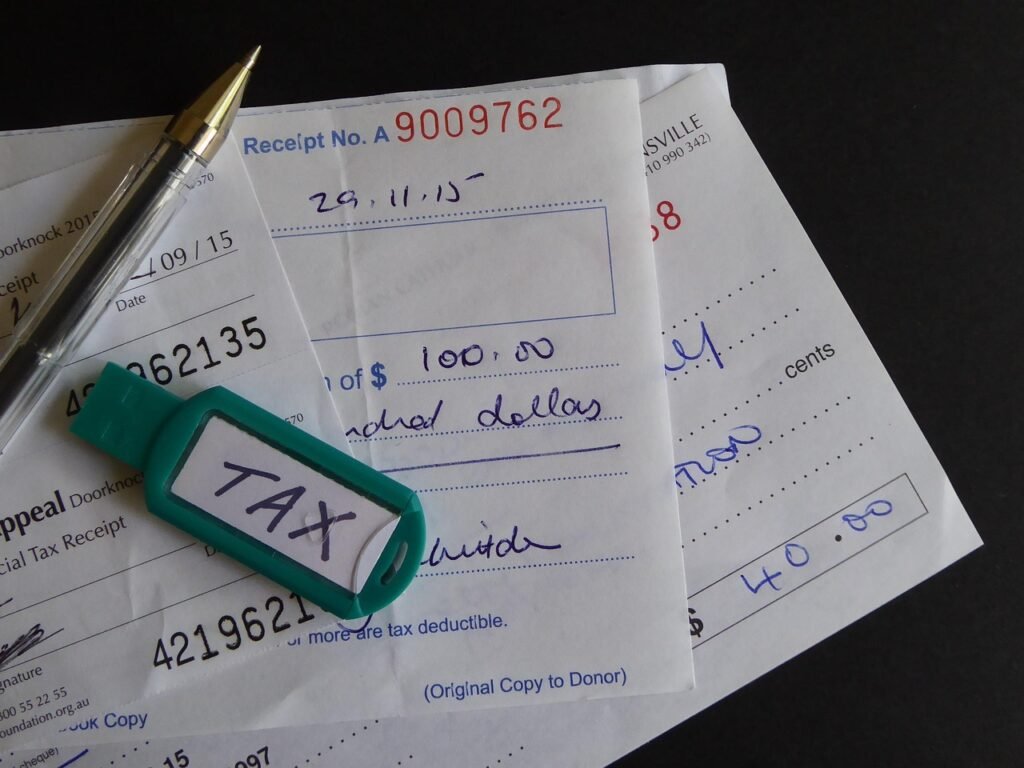
For most drivers, mileage is the single largest deduction available — often worth more than every other deduction combined. You have two ways to claim vehicle expenses:
Standard mileage rate. The IRS sets a per-mile rate that covers gas, maintenance, repairs, depreciation, and insurance all in one number. For 2026, the standard mileage rate is 72.5 cents per mile, up from 70 cents in 2025. To use this method, multiply your total business miles by the rate. If you drive 15,000 business miles in 2026, that’s a deduction of roughly $10,875.
Actual expense method. Instead of the flat rate, you track and deduct the actual costs of operating your vehicle — gas, repairs, insurance, registration fees, and depreciation — based on the percentage of total miles driven for business. This method requires more detailed recordkeeping and receipts for every expense, but it can pay off for drivers with newer or more expensive vehicles.
You can’t switch back and forth freely between methods for the same vehicle, so it’s worth thinking ahead about which approach fits your situation.

One of the most common mistakes drivers make is only counting miles tracked by the app itself. Rideshare and delivery apps generally only log mileage while you’re actively on a trip or delivery — not the miles you drive between trips, to a surge zone, or back home after your last drop-off. These “deadhead” miles are fully deductible too, and for many drivers they add a meaningful percentage on top of what the app reports. Keeping your own mileage log — whether on paper or through a tracking app — helps capture all of this driving, not just the portion the platform sees.

Beyond mileage, a wide range of everyday costs related to your driving work can be deducted, including:
If you use the standard mileage rate, you generally can’t separately deduct gas or repairs, since those are already built into the rate — but items like phone costs, tolls, parking, and supplies remain deductible on top of it.

Self-employment tax covers Social Security and Medicare contributions that would normally be split between an employer and employee. As a self-employed driver, you pay both halves yourself, which adds up to 15.3% of your net earnings. The good news is that you can deduct half of this self-employment tax from your adjusted gross income, which softens the blow somewhat.

Starting with the 2025 tax year (filed in 2026), a new qualified tips deduction allows workers who receive tips — including rideshare and delivery drivers — to deduct a portion of their qualified tip income from taxable earnings, up to a set annual limit. If a significant part of your income comes from tips, it’s worth looking into how this applies to your situation, since it’s a relatively new provision and the details matter.

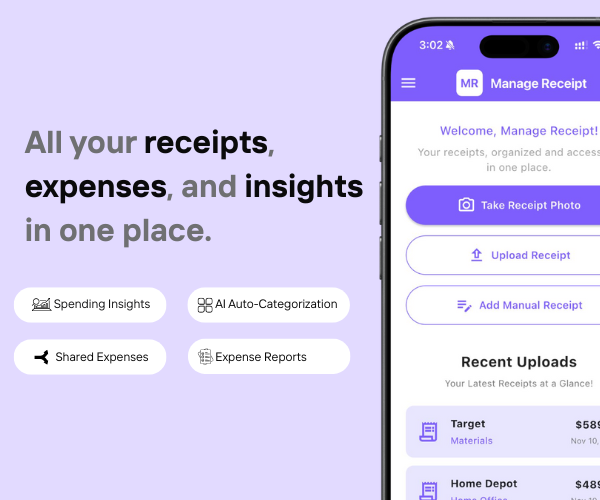
Whether you use a credit card or debit card, the real challenge is organizing proof.
Manage Receipt helps bridge that gap by ensuring every transaction has proper documentation.
With Manage Receipt, you can:
Capture receipts instantly to prevent loss
Store all receipts in one centralized system
Access proof quickly for approvals and audits
Improve visibility into spending
Reduce manual work and admin overhead
The biggest benefit of using ManageReceipt isn’t just the time you save. It’s the money you keep — because every receipt you capture is a deduction you can actually claim.
Try ManageReceipt free today — available on iOS and Android. No credit card required.
Click Here to know more about how Manage Receipt helps small businesses.

Driving for rideshare and delivery platforms comes with unique tax responsibilities, but it also offers valuable opportunities to reduce your tax bill through legitimate deductions. While the mileage deduction is often the most significant write-off, smaller expenses such as phone costs, parking fees, tolls, supplies, and platform-related expenses can add up quickly. Staying on top of quarterly estimated tax payments can help you avoid IRS penalties, and maintaining accurate mileage logs and expense records is essential for protecting your deductions in the event of an audit. By keeping organized throughout the year and using tools like Manage Receipt to securely store and categorize receipts, drivers can simplify tax season, maximize deductions, and keep more of their hard-earned income. This article is for general informational purposes only and should not be considered professional tax advice.

Every tool on this list helps you run your business better. But none of them matter if your financial records are a mess.
Before you invest in project management software, marketing tools, or e-commerce platforms — make sure your expense tracking is airtight. Every purchase you make for your business needs to be documented, categorised, and stored correctly. Not just for tax season, but for understanding whether your business is actually profitable.
That is exactly what ManageReceipt is built for. Scan a receipt in seconds, add the business purpose, and it is stored, backed up, and export-ready. No shoebox of crumpled paper. No scrambling at tax time.
Download ManageReceipt Free — Start Tracking Expenses Today
iOS & Android | managereceipt.com


© 2025 Manage Receipt. All Rights Reserved.
