


Some businesses always seem calm and prepared — even during audits, tax season, or rapid growth. Others struggle with confusion, last-minute stress, and financial uncertainty. The difference isn’t revenue or size.
It’s organization.
Financially organized businesses operate differently. They don’t rely on memory, assumptions, or panic-driven decisions. Instead, they build simple systems that give them clarity and control.
Here’s what financially organized businesses consistently do differently.

Financially organized businesses don’t see organization as “admin work.”
They understand that:
Clear records support better decisions
Organization reduces risk
Preparedness saves time and money
Organization isn’t optional — it’s part of how the business runs.

Unorganized businesses depend on memory:
“I remember that expense”
“I’ll find the receipt later”
“I think we already paid this”
Financially organized businesses rely on records, not recall.
Every transaction has proof. Every number can be verified.
This removes doubt and hesitation from decision-making.

One major difference is where information lives.
Financially organized businesses:
Store records in one system
Avoid scattered emails, folders, and paper files
Can access documents quickly when needed
Centralization reduces confusion and makes financial reviews easier.

Unorganized businesses react when problems appear.
Organized businesses are already ready.
They:
Prepare records continuously
Review information regularly
Anticipate needs instead of scrambling
This preparedness shows up during audits, tax filing, reimbursements, and reviews.

Financial organization isn’t about complexity.
Financially organized businesses:
Record transactions consistently
Review finances on a schedule
Follow the same process every time
Simple habits, repeated consistently, create long-term clarity.
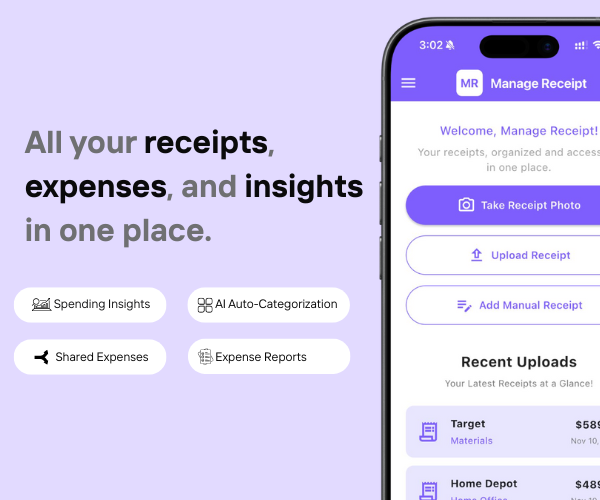
One area where businesses often lose control is receipts and proof.
Manage Receipt helps financially organized businesses maintain clarity without manual effort.
With Manage Receipt, businesses can:
Scanning receipts instantly after purchases
Store all proof in one secure place
Retrieve records in seconds
Support reviews, audits, and tax preparation
Access records anytime, anywhere
Instead of chasing paperwork, businesses stay prepared automatically.
Click here to find out how manage receipt helps small businesses.

What financially organized businesses do differently isn’t complicated — it’s intentional. They prioritize organization, rely on records instead of memory, stay prepared, and build simple habits that support clarity.
With tools like Manage Receipt, financial organization becomes effortless — helping businesses stay confident, calm, and in control no matter what comes next.
Financial success isn’t just about earning more.
It’s about being prepared.

From smartphones to air conditioners, big purchases come with big responsibilities. With Manage Receipt, you can stop worrying about lost receipt. Whether you’re requesting a refund or sending a product for repair, your receipts are always there when you need them.


© 2025 Manage Receipt. All Rights Reserved.
