


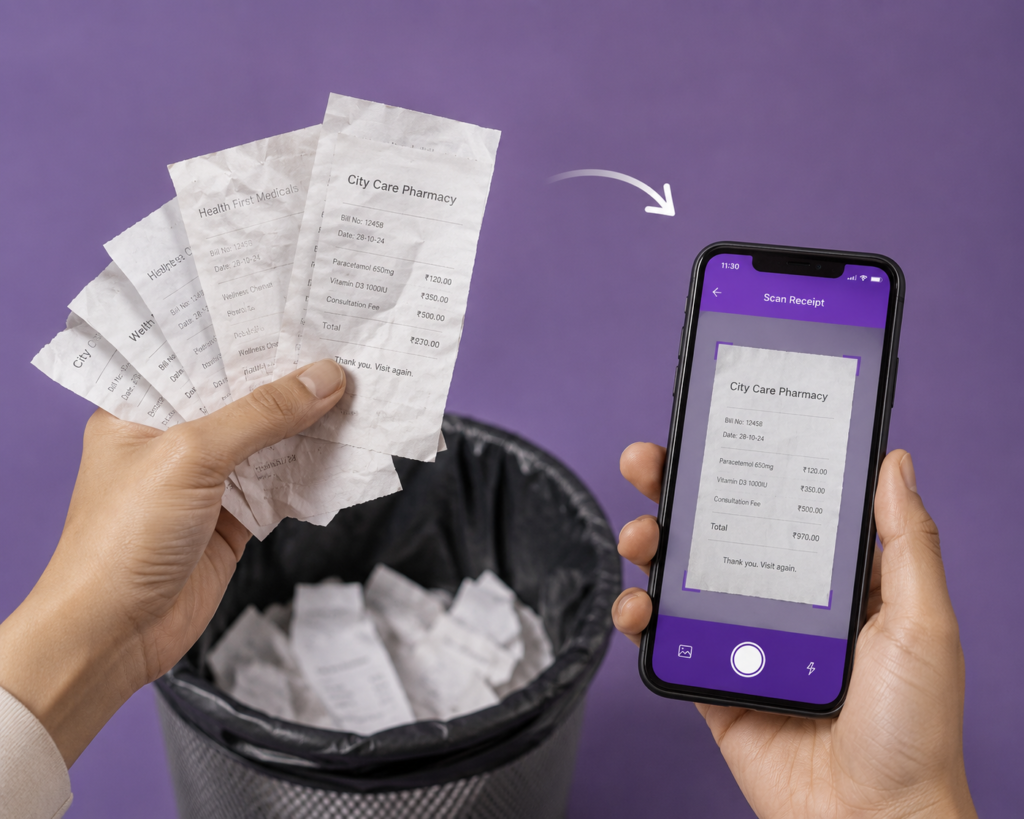
Most people throw away healthcare receipts the moment they walk out of a clinic, pharmacy, or hospital. It feels like there’s nothing to do with them — the bill was paid, the insurance handled it, and it was just a small co-pay anyway.
That logic works until it doesn’t. The moment you need to file an HSA reimbursement, claim a medical deduction, dispute an EOB, or prove an out-of-pocket expense — every missing receipt becomes a real problem. And the costs add up fast.
The good news: saving and organizing medical receipts has never been easier. A consistent system — even a simple one — can recover hundreds or thousands of dollars over a single year.
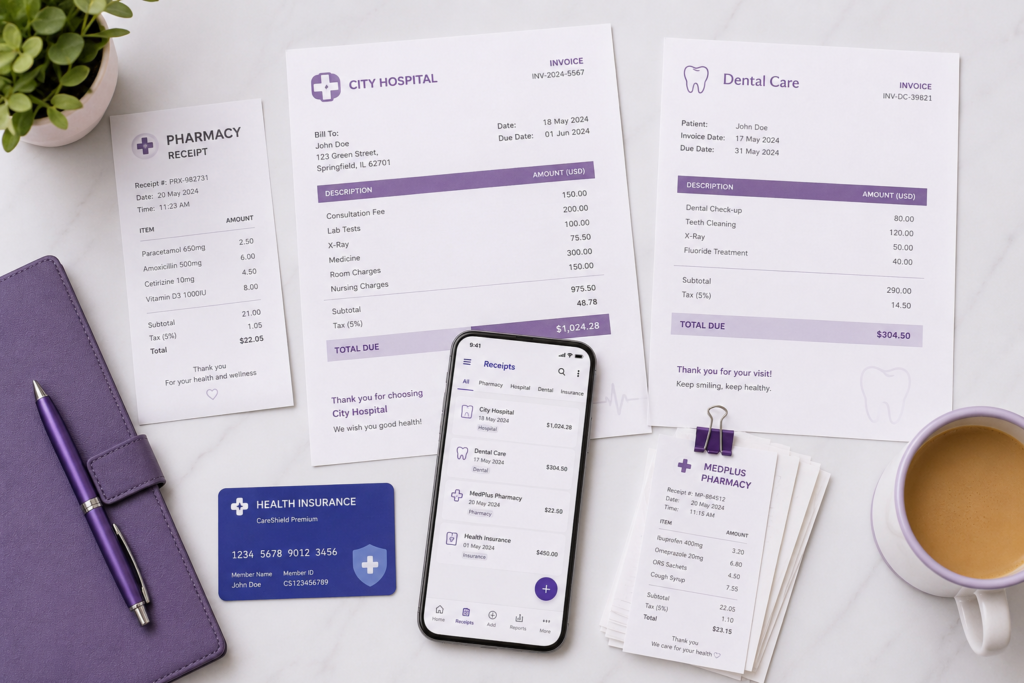
You have an HSA or FSA account: Every eligible expense you pay out of pocket can be reimbursed — but only with a valid receipt. Without one, the expense is gone.
You’re approaching the IRS threshold for medical deductions: If your out-of-pocket medical expenses exceed 7.5% of your adjusted gross income, you may be able to deduct them. Receipts are the proof.
Your insurance sent an Explanation of Benefits (EOB) that doesn’t match what you paid: Insurance billing errors are more common than most people realize. Your receipt is the evidence you
need to dispute the discrepancy.
You’re self-employed or run a small business: Certain medical premiums and out-of-pocket costs may be deductible as a business expense — but only with documentation.
You’ve recently had a major health event: Surgeries, hospitalizations, specialist visits, and long-term prescriptions can generate thousands of dollars in receipts. A disorganized system means missed
reimbursements.
Not every piece of paper from a healthcare visit needs to be filed forever — but far more than most people realize qualifies. Here’s a practical breakdown:
Always save — these are directly reimbursable or deductible:
• Doctor visit co-pays and out-of-pocket consultation fees
• Prescription receipts from any pharmacy (including mail-order)
• Dental and orthodontic treatment receipts
• Vision care: glasses, contacts, and eye exams
• Hospital bills and surgical procedure invoices
• Lab work, bloodwork, imaging (X-rays, MRI, CT scans)
• Mental health therapy and psychiatric care receipts
• Physical therapy and chiropractic care
• Medical equipment: crutches, wheelchairs, hearing aids, CPAP machines
• Health insurance premiums (especially if self-employed)
Often overlooked — but also eligible:
• Mileage to and from medical appointments (IRS allows a per-mile deduction)
• Over-the-counter items that are FSA/HSA-eligible (bandages, thermometers, antacids, etc.)
• Sunscreen with SPF 15+ — eligible for HSA reimbursement
• Menstrual care products — now HSA/FSA eligible since the CARES Act
• Telehealth visit receipts
• Weight-loss program costs if prescribed by a doctor for a specific condition
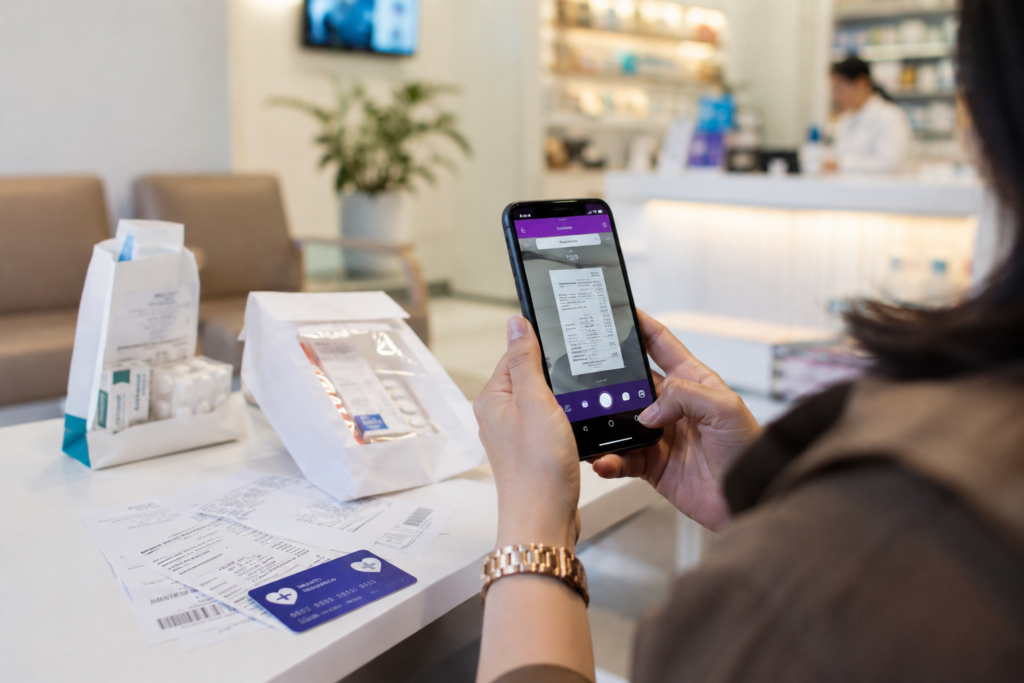
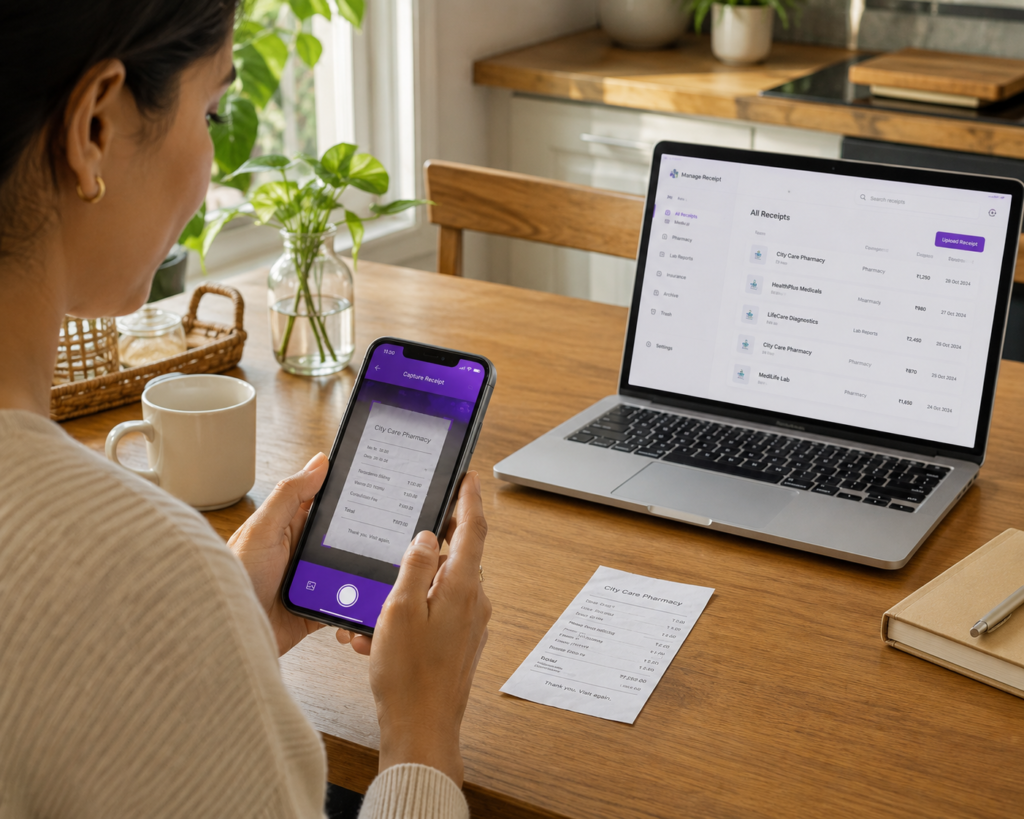
The biggest barrier to saving medical receipts isn’t intention — it’s friction. Most people mean to save them, but without a clear system, receipts end up in a drawer, a bag, or the trash. Here’s a structure
that works:
Capture the receipt immediately after payment.
The single most effective habit is scanning or photographing a receipt the moment you receive it — before you leave the clinic, pharmacy, or hospital. Use a receipt app on your phone so it’s done in
seconds. If you wait until you get home, you’ll forget half the time.
Separate medical from everything else.
Keep healthcare receipts in their own digital folder or category. Mixing them with grocery or restaurant receipts makes reimbursement season needlessly painful.
Match receipts to insurance documents.
When you receive an Explanation of Benefits (EOB) from your insurer, compare it to your receipt.Discrepancies — overcharges, unbilled payments, duplicate billing — are common and often go
unchallenged because people don’t have the receipt to reference.
Set a monthly reimbursement date.
If you have an HSA or FSA, don’t wait until year-end to submit claims. Set a recurring date — the 1st of every month — to review last month’s receipts and submit any eligible expenses for reimbursement.
This keeps your account funded and your system current.
Store digitally, back up automatically.
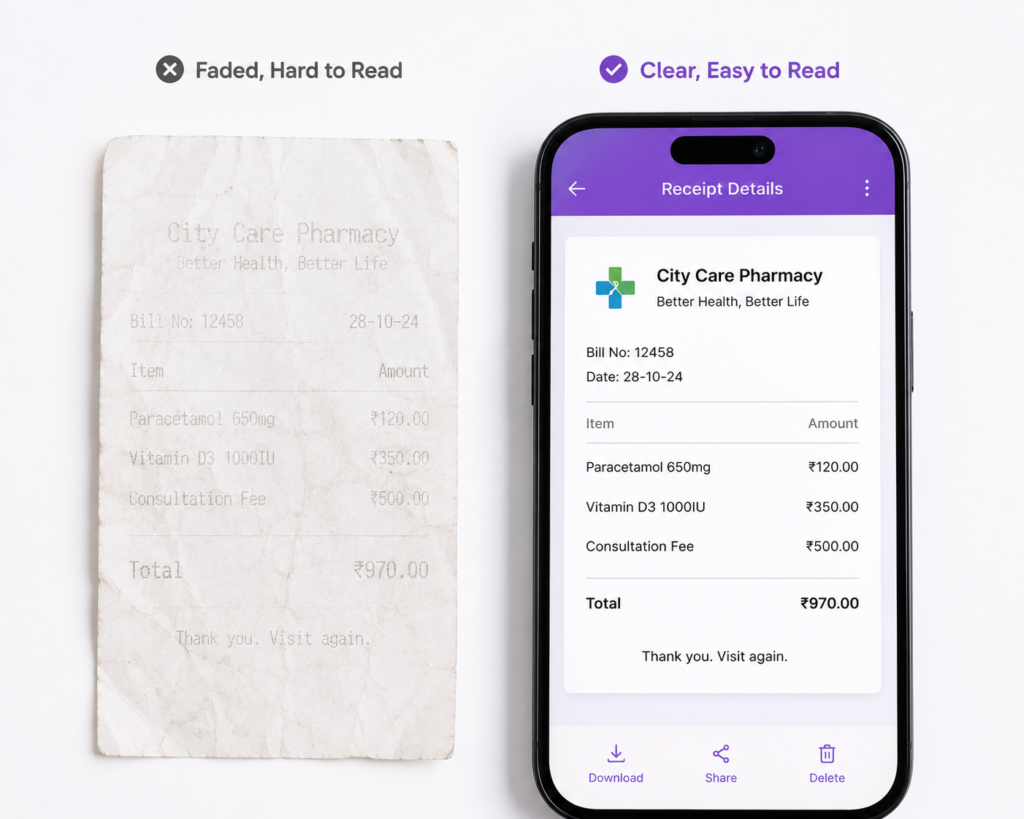
Paper receipts fade. Thermal receipts from pharmacies become unreadable within months. Digital storage — especially cloud-backed — means your proof is permanent and searchable.
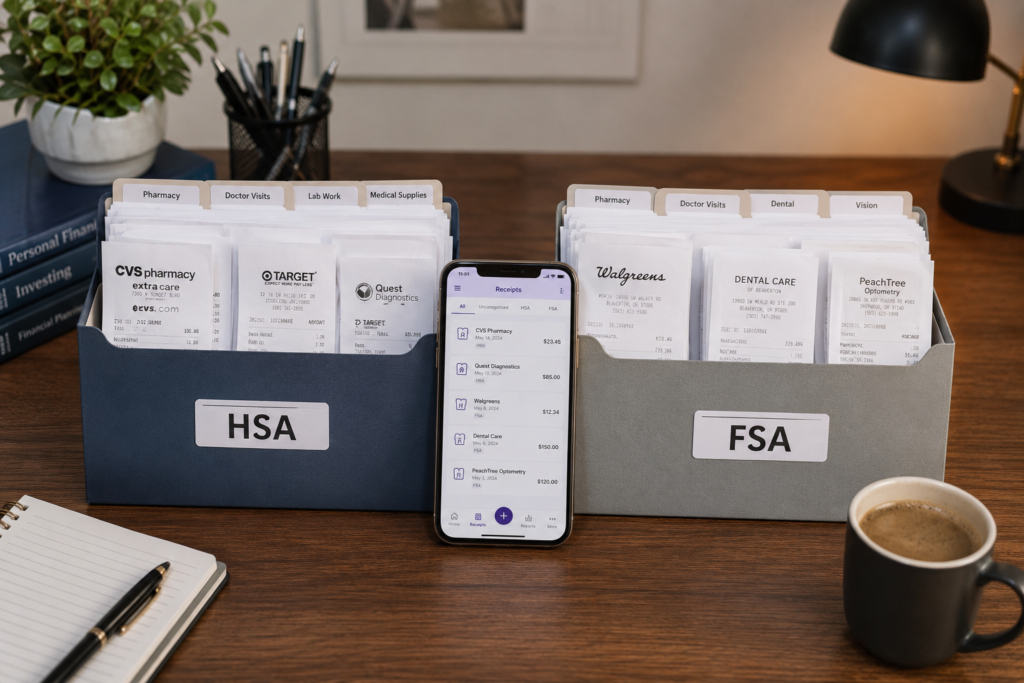
Health Savings Accounts (HSA) and Flexible Spending Accounts (FSA) both allow tax-free reimbursement of qualified medical expenses — but they work differently, and the receipt rules reflect that.
HSA — no deadline to submit receipts: One of the most powerful and underused features of an HSA is that there’s no time limit on reimbursement. You can pay a medical expense today, save the receipt, and reimburse yourself five years from now — tax-free. This means your HSA can function as a long-term investment account while you document expenses for future withdrawals. But you must keep the receipts indefinitely to support any future reimbursement.
FSA — use it or lose it: FSA funds generally expire at year-end (with a short grace period or limited rollover depending on your plan). This makes timely receipt submission critical. Missing the deadline doesn’t just mean extra paperwork — it means losing the money entirely.
Both require the same receipt format: Date of service, provider name, description of expense, and amount paid. A credit card receipt without an itemized description is often not sufficient on its own.
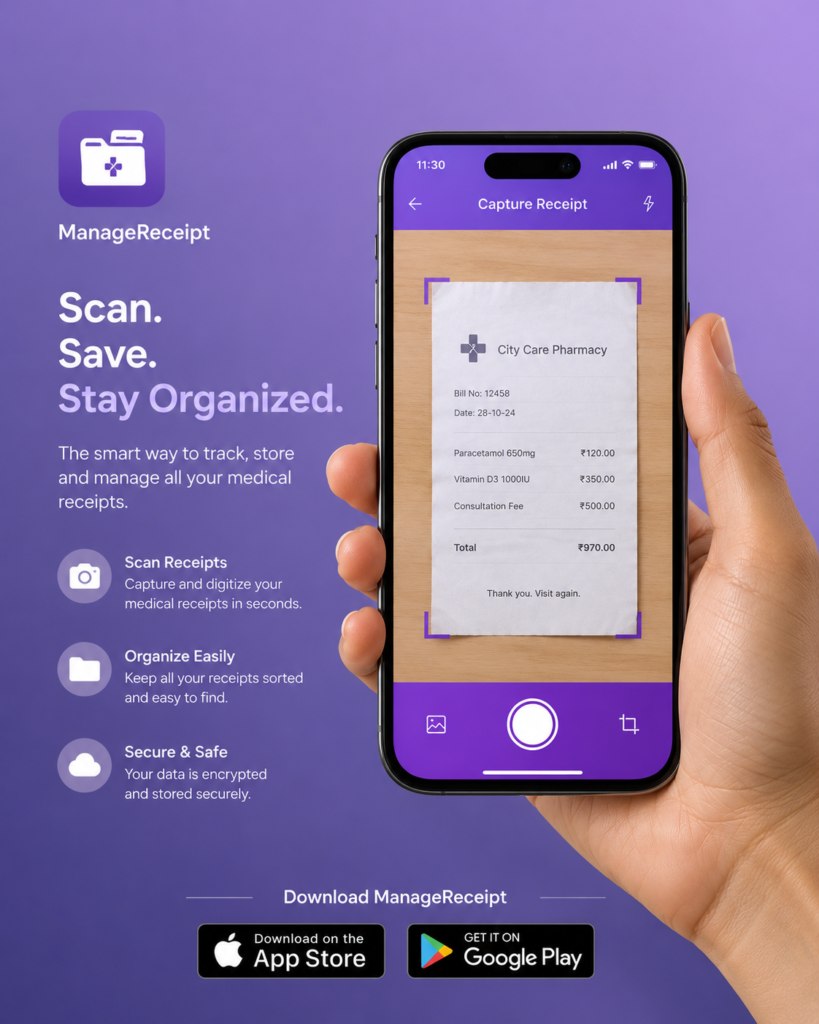
Most healthcare expenses happen in the moment — a co-pay at the doctor’s office, a prescription pickup on the way home, a lab bill that arrives weeks later. The challenge is capturing all of them reliably before they’re lost.
With Manage Receipt, you can:
• Scan any medical receipt in seconds — from co-pay slips to hospital invoices
• Store all receipts in one searchable, organized place
• Tag receipts as HSA/FSA-eligible for instant reimbursement claims
• Access any receipt instantly when your insurer or the IRS asks for proof
• Never lose a thermal pharmacy receipt to fading again — it’s stored digitally
• Track total out-of-pocket medical spending across the year for tax planning
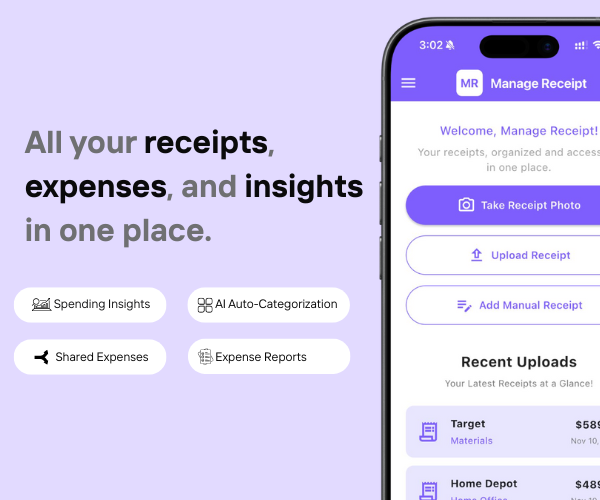
Whether you use a credit card or debit card, the real challenge is organizing proof.
Manage Receipt helps bridge that gap by ensuring every transaction has proper documentation.
With Manage Receipt, you can:
Capture receipts instantly to prevent loss
Store all receipts in one centralized system
Access proof quickly for approvals and audits
Improve visibility into spending
Reduce manual work and admin overhead
The biggest benefit of using ManageReceipt isn’t just the time you save. It’s the money you keep — because every receipt you capture is a deduction you can actually claim.
Try ManageReceipt free today — available on iOS and Android. No credit card required.
Click Here to know more about how Manage Receipt helps small businesses.
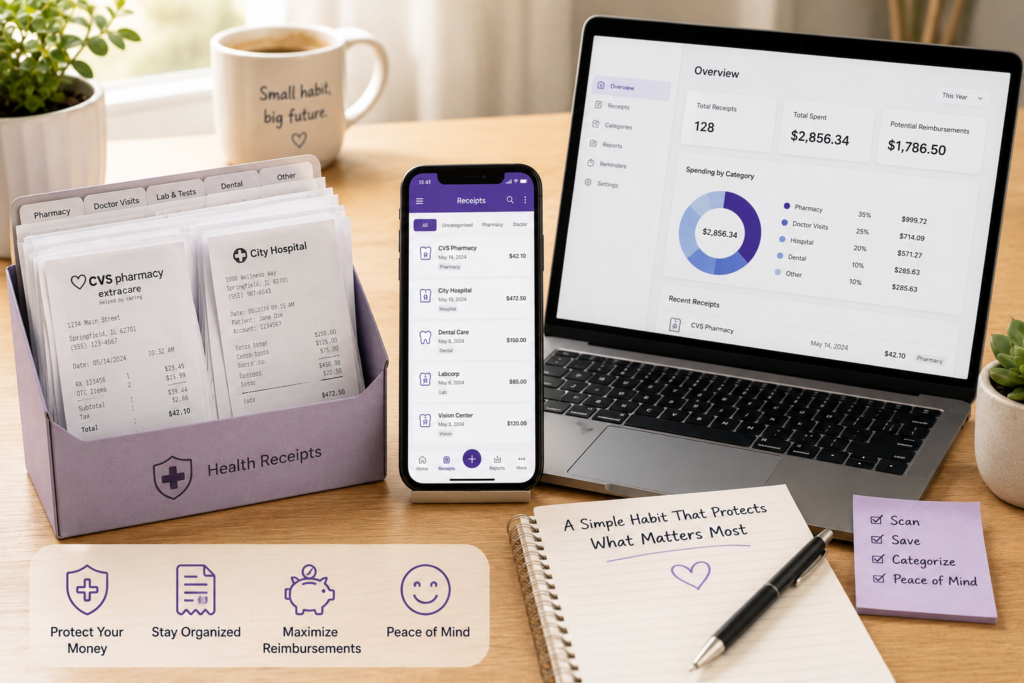
Medical receipt tracking isn’t a task for accountants or people with complex finances. It’s a basic habit that anyone paying out-of-pocket healthcare costs should build — because the money it protects is
already yours.
Whether you’re reimbursing through an HSA, filing for a tax deduction, disputing an insurance error, or simply trying to understand where your healthcare money goes — receipts are the foundation. Without them, you’re relying on systems and institutions to get it right without any way to verify.
The system doesn’t have to be complicated. Scan it, save it, categorize it. Done in ten seconds at the point of payment. That ten seconds is worth more than you think when reimbursement season arrives.

Every tool on this list helps you run your business better. But none of them matter if your financial records are a mess.
Before you invest in project management software, marketing tools, or e-commerce platforms — make sure your expense tracking is airtight. Every purchase you make for your business needs to be documented, categorised, and stored correctly. Not just for tax season, but for understanding whether your business is actually profitable.
That is exactly what ManageReceipt is built for. Scan a receipt in seconds, add the business purpose, and it is stored, backed up, and export-ready. No shoebox of crumpled paper. No scrambling at tax time.
Download ManageReceipt Free — Start Tracking Expenses Today
iOS & Android | managereceipt.com


© 2025 Manage Receipt. All Rights Reserved.
