


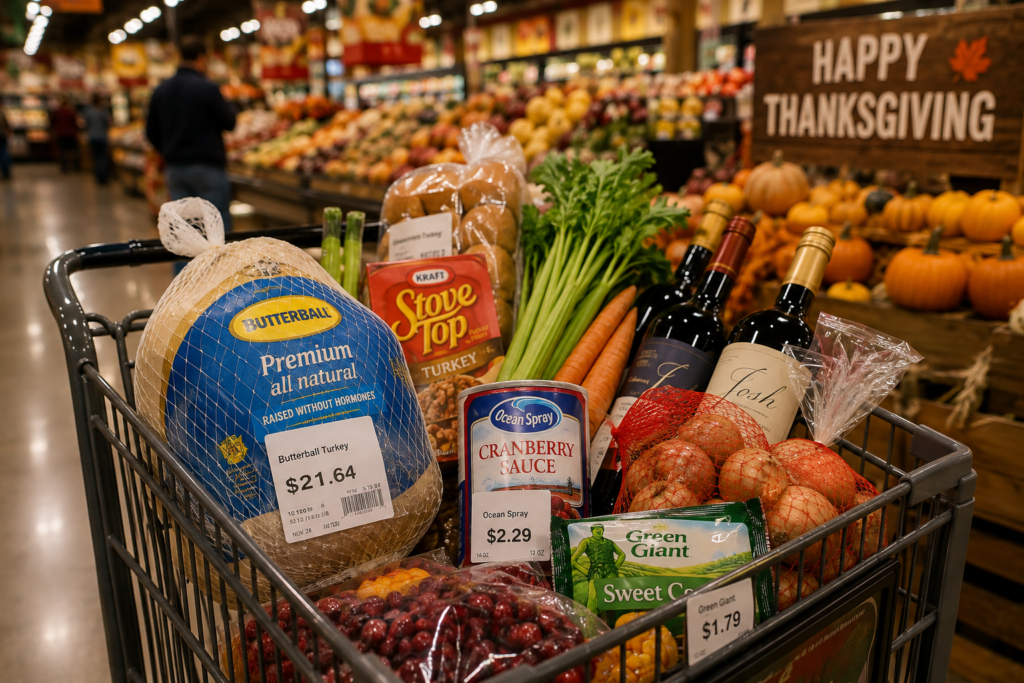
Thanksgiving shopping is different from regular grocery shopping. You’re not buying staples — you’re buying a one-time meal with specialty items, fresh produce, and seasonal pricing. Understanding why costs spike helps you find where to cut.
- Seasonal demand drives prices up: Turkeys, cranberries, and sweet potatoes are at their peak during November. Demand is highest, supply is limited, and prices reflect that. A turkey that costs $0.99 per pound in February costs $1.29 per pound in November.
- Fresh produce adds up quickly: Thanksgiving requires fresh vegetables: potatoes, carrots, celery, onions, fresh herbs. Fresh produce is more expensive than frozen or canned equivalents. A 5-pound bag of fresh potatoes costs $3-4. A bag of frozen potatoes costs $1.50.
- Specialty items are pricey: Cranberry sauce, stuffing mixes, gravy bases, pie crusts — these items are sold exclusively during the holiday season. Specialty pricing is high because they’re only available for a short window.
- Wine and alcohol add hidden costs: Many families budget for the meal but forget to budget for wine and drinks. A bottle of wine is $10-20. Two bottles is $40. Three bottles of quality wine plus beer is $50-60.
The average American spends $47-89 on Thanksgiving groceries for a family of four. With smart tracking and planning, you can reduce that by 25-40% without cutting quality or portions.
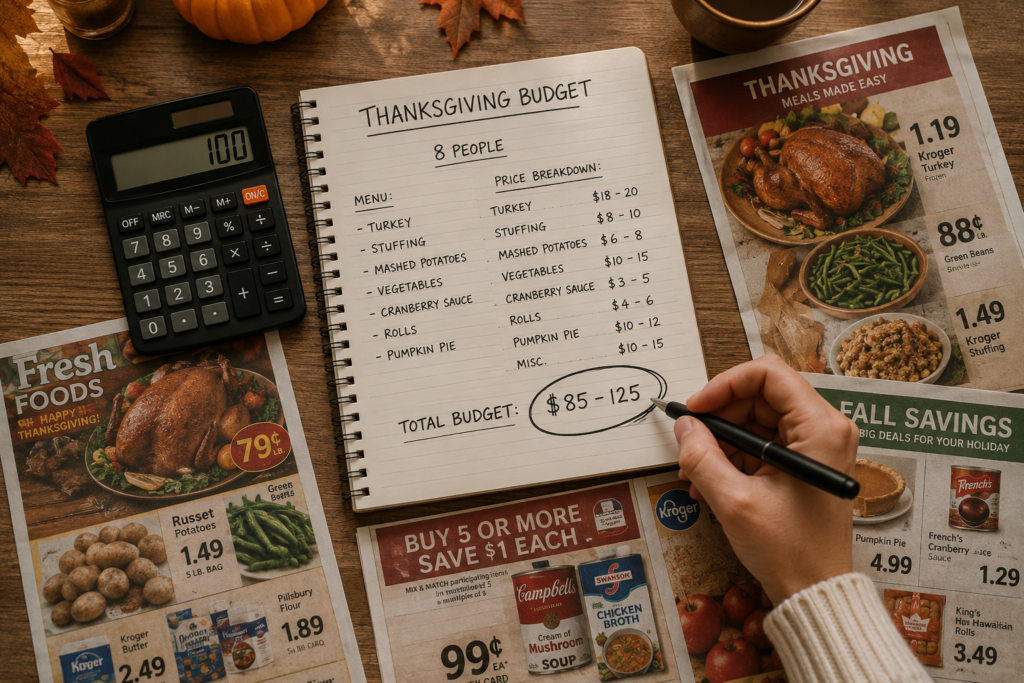
Before you shop, you need a budget. Not a vague idea of “spending less,” but a specific number based on your menu and guest count.
Step 1: Start with your guest count
Plan for 1.5 pounds of turkey per person. Plan for 3/4 to 1 cup of side dishes per person. Plan for 1 slice of pie plus desserts. Your guest count determines portion sizes, which determines ingredient quantities, which determines cost.
Step 2: Build your menu first
Decide exactly what you’re serving: main dish, 3-4 side dishes, desserts, drinks. Don’t leave this vague. “Vegetables” is not a menu item. “Roasted carrots and parsnips with thyme” is. Specific menus lead to specific shopping lists, which lead to accurate budgets.
Step 3: Price each dish
For each menu item, estimate the cost. A turkey: $20-30. Stuffing: $8-12. Mashed potatoes: $5-8. Cranberry sauce: $3-5. Gravy: $4-6. Pie: $8-15. Add everything up and that’s your realistic budget.
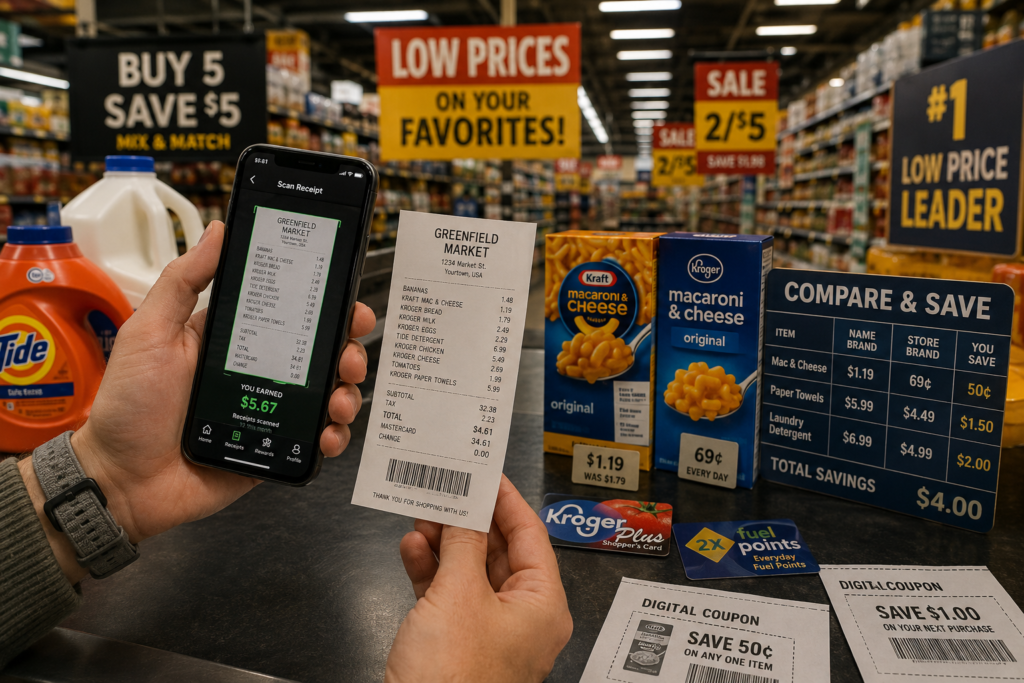
Once you know your budget, the next step is finding savings. Most families leave $20-40 on the table by shopping carelessly. Here’s where to save:
Strategy 1: Buy your turkey early
Turkey prices are lowest 2-3 weeks before Thanksgiving. Prices spike as the holiday gets closer. Buy by mid-November and freeze if needed. A $1.20/lb turkey bought early costs less than a $1.40/lb turkey bought the week of Thanksgiving.
Strategy 2: Use store loyalty programs and coupons
Major grocery chains release Thanksgiving ads with loss-leader pricing on turkeys and staple items. They’re counting on you to buy full-price items too. Check store apps for digital coupons. Stack store coupons with manufacturer coupons for maximum savings.
Strategy 3: Buy in bulk where it makes sense
Bulk items like potatoes, onions, and carrots are cheaper by the pound when bought in larger quantities. A 5-lb bag of potatoes is cheaper per pound than a 2-lb bag. Costco and Sam’s Club are valuable for Thanksgiving shopping if you have a membership.
Strategy 4: Choose store-brand over name-brand
Store-brand cranberry sauce, stuffing mix, and gravy are identical to name-brand versions at a 30-50% discount. The only exception: butter and cream should be quality brands because they’re noticeable in the final dish.
Strategy 5: Make staples from scratch
Homemade gravy costs $2-3 and tastes better than $5 jarred gravy. Homemade cranberry sauce costs $3-4 and is vastly superior to canned. Homemade pie costs $5-8 and beats a $12-15 bakery pie. The time investment is worth the savings.
Strategy 6: Buy seasonal produce
November vegetables like potatoes, carrots, celery, onions, and squash are cheapest in November. They’re in season. Avoid specialty produce like asparagus or berries, which are out of season and expensive.
Strategy 7: Skip pre-made items
Pre-made stuffing ($6-8), pre-made cranberry sauce ($4-6), and bottled gravy ($5-7) cost 2-3x as much as making them yourself. Invest 30 minutes of prep work to save $15-20.

Savings only matter if you actually pay attention to what you’re spending. Tracking Thanksgiving groceries from the first trip to the last trip ensures you hit your budget and know exactly where your money went.
Step 1: Separate your Thanksgiving shopping
Don’t mix Thanksgiving groceries with regular shopping. Use a separate cart, a separate transaction, or a separate trip. This makes tracking clear and prevents regular grocery spending from bleeding into your Thanksgiving budget.
Step 2: Photograph every receipt
After each shopping trip, photograph the receipt. Write the total on the receipt with a pen. Keep all receipts in one place — a folder, an envelope, or digital storage. Don’t lose them.
Step 3: Use a receipt tracker app
Apps like Manage Receipt let you scan receipts instantly. The app extracts the total, categorizes it as Thanksgiving groceries, and backs it up in the cloud. Search by date or amount. Instant clarity on what you’ve spent.
Step 4: Log the total after each trip
Keep a running tally. After trip 1: $28. After trip 2: $28 + $42 = $70. After trip 3: $70 + $35 = $105. After trip 4: $105 + $18 = $123. Seeing the cumulative total keeps you honest and alerts you if you’re heading over budget.
Pro tip: If you’re $20 over budget after 80% of your shopping, it’s time to cut back. Skip the expensive wine, pick a cheaper pie, or reduce portion sizes. Tracking lets you make these decisions mid-process instead of discovering you overspent on Thanksgiving morning.

Different stores have different prices. Planning where to buy what maximizes savings.
Warehouse clubs (Costco, Sam’s Club):
Regular grocery store (Safeway, Kroger, Whole Foods):
Budget stores (Aldi, Walmart, Target):
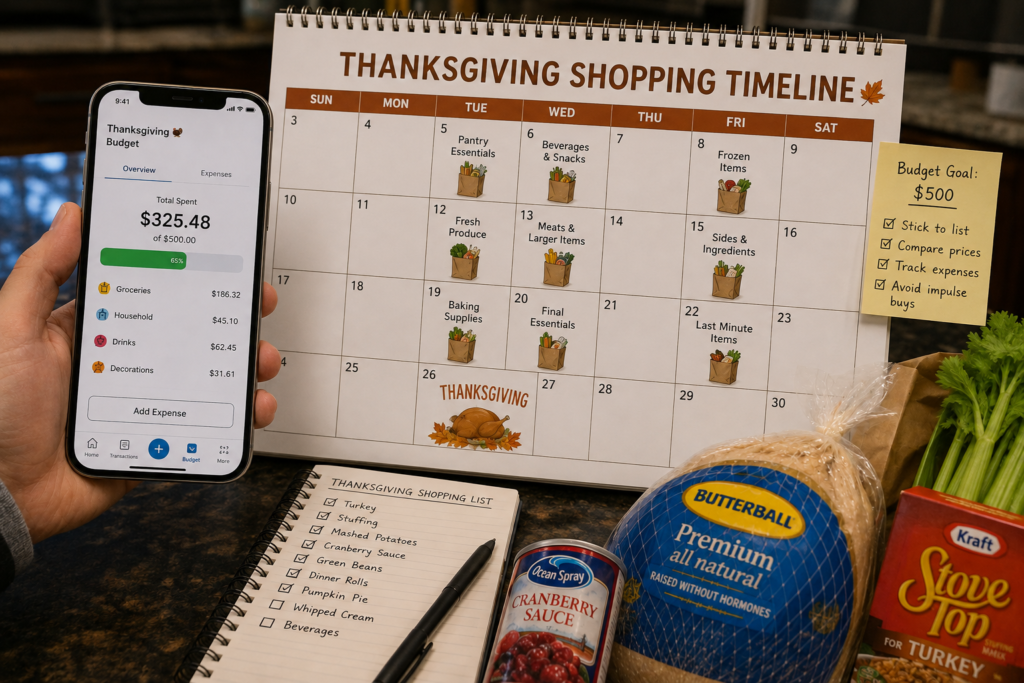
Here’s how to track Thanksgiving grocery spending from start to finish:
Week 1 (10-14 days before): First shopping trip
Buy: frozen turkey (if on sale), bulk produce (potatoes, carrots, onions, celery), pantry staples, spices. Track this trip. Budget remaining: $80-95.
Week 2 (7-10 days before): Second shopping trip
Buy: fresh herbs (if needed), specialty items (cranberry sauce, stuffing mixes), wine/beverages, backup items. Track this trip. Budget remaining: $40-50.
Week 3 (3-5 days before): Final shopping trip
Buy: fresh dairy (butter, cream, milk), bakery items (if buying pies), last-minute produce freshness items. Track this trip. Budget remaining: $0-10.
Day before Thanksgiving: Emergency trip
If anything was missed or you need backup items, this is the trip. Keep a small emergency budget ($10-15) for unexpected needs. Track this too.

AI receipt scanning is already standard. The next wave includes emerging technologies that make receipt management even smarter and more integrated:
The basic principle stays the same: let artificial intelligence handle the boring work so you focus on what matters.

Whether you use a credit card or debit card, the real challenge is organizing proof.
Manage Receipt helps bridge that gap by ensuring every transaction has proper documentation.
With Manage Receipt, you can:
Capture receipts instantly to prevent loss
Store all receipts in one centralized system
Access proof quickly for approvals and audits
Improve visibility into spending
Reduce manual work and admin overhead
The biggest benefit of using ManageReceipt isn’t just the time you save. It’s the money you keep — because every receipt you capture is a deduction you can actually claim.
Try ManageReceipt free today — available on iOS and Android. No credit card required.
Click Here to know more about how Manage Receipt helps small businesses.

Thanksgiving groceries don’t have to derail your monthly budget. With a realistic plan, smart shopping, and consistent tracking, you can serve an amazing meal for $85-125 instead of $150-200.
The families who save the most aren’t the ones cutting corners on quality. They’re the ones who plan ahead, track their spending, and make intentional decisions about where to splurge and where to save. That’s exactly what this guide helps you do.
Start planning today. Know your menu. Know your budget. Track every receipt. Thanksgiving will be delicious — and affordable.

Every tool on this list helps you run your business better. But none of them matter if your financial records are a mess.
Before you invest in project management software, marketing tools, or e-commerce platforms — make sure your expense tracking is airtight. Every purchase you make for your business needs to be documented, categorised, and stored correctly. Not just for tax season, but for understanding whether your business is actually profitable.
That is exactly what ManageReceipt is built for. Scan a receipt in seconds, add the business purpose, and it is stored, backed up, and export-ready. No shoebox of crumpled paper. No scrambling at tax time.
Download ManageReceipt Free — Start Tracking Expenses Today
iOS & Android | managereceipt.com


© 2025 Manage Receipt. All Rights Reserved.
