



Thanksgiving is supposed to bring people together. However, when it comes to splitting costs, many families and friend groups end up with conflict instead.
Someone hosts and buys everything. Guests expect a free meal. The host resents spending $150+ alone. Guests feel guilty but don’t know how much to contribute. Nobody talks about it until after dinner — and then it’s awkward.
This is exactly what split thanksgiving costs should solve. The problem isn’t that people don’t want to help. The problem is nobody knows how to split thanksgiving costs fairly without creating tension.
The average Thanksgiving dinner costs $85-150 for 8 people. When split fairly, that’s $11-19 per person. Most guests have no idea how much the host actually spent — and many would help if they knew.
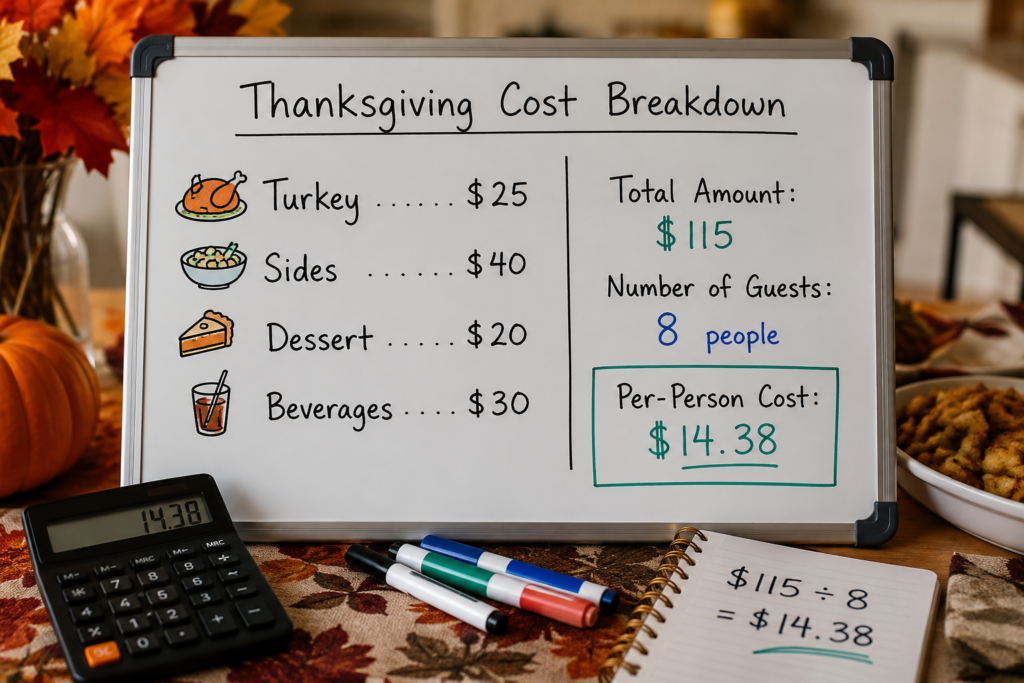
Before you can split thanksgiving costs fairly, you need to know the actual total. Most hosts never calculate this — they just spend money and hope guests pitch in.
Here’s the reality: A typical Thanksgiving meal for 8 people costs $85-150 total. That breaks down to approximately $11-19 per person.
These are realistic costs. When you split thanksgiving costs, ask guests to contribute $15-20 each. This covers their portion fairly without burdening anyone.
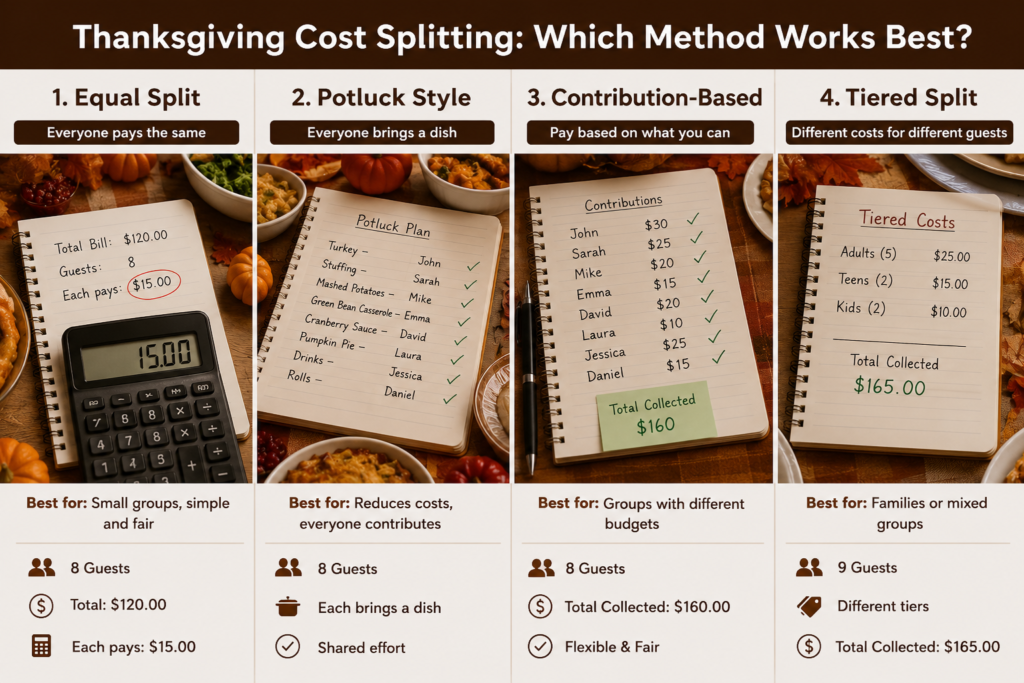
There’s no single “right” way to split thanksgiving costs. Different situations call for different approaches. Here are four methods that work:
Method 1: Equal Split
How it works: Add up total costs. Divide by number of guests. Everyone pays the same amount.
Example: $120 total ÷ 8 people = $15 per person
Best for: When everyone eats equally and nobody minds paying the same.
Pros: Simple, fair, easy to calculate.
Cons: Doesn’t account for guests who eat more or less.
Method 2: Potluck Style (Assign Dishes)
How it works: Host provides turkey and main dishes. Guests each bring one side or dessert (and pay for it).
Example: Host pays $60 for turkey + main sides. Guest A brings $15 stuffing. Guest B brings $18 pie. Guest C brings $20 wine.
Best for: Smaller groups or close friends where collaboration feels natural.
Pros: Spreads responsibility. Shared work feels fair.
Cons: Requires coordination. Some dishes cost more than others.
Method 3: Contribution-Based
How it works: Ask guests to contribute what they can afford. Suggest $15-20 but accept less if needed.
Example: Host asks for $15-20 contributions. Most give $20. A few give $15. One gives $10. Total covers the cost.
Best for: Diverse income groups where fairness means flexibility.
Pros: Accommodates different budgets. Reduces resentment.
Cons: Requires tactful communication.
Method 4: Tiered Contribution
How it works: Different guests pay different amounts based on what they consume or their ability to pay.
Example: Main guests (staying for whole meal) pay $20. Drop-in guests (coming for dessert only) pay $8. Kids eat free.
Best for: Large mixed groups with different participation levels.
Pros: Tailored to actual circumstances. Feels customized.
Cons: Requires more planning and communication.

Asking guests to split thanksgiving costs feels awkward. However, most people are happy to contribute when asked directly and honestly. The key is how you ask.
Do this:
Don’t do this:
This message is friendly, specific, and gives options. Most guests will respond positively. Many will offer more than asked.
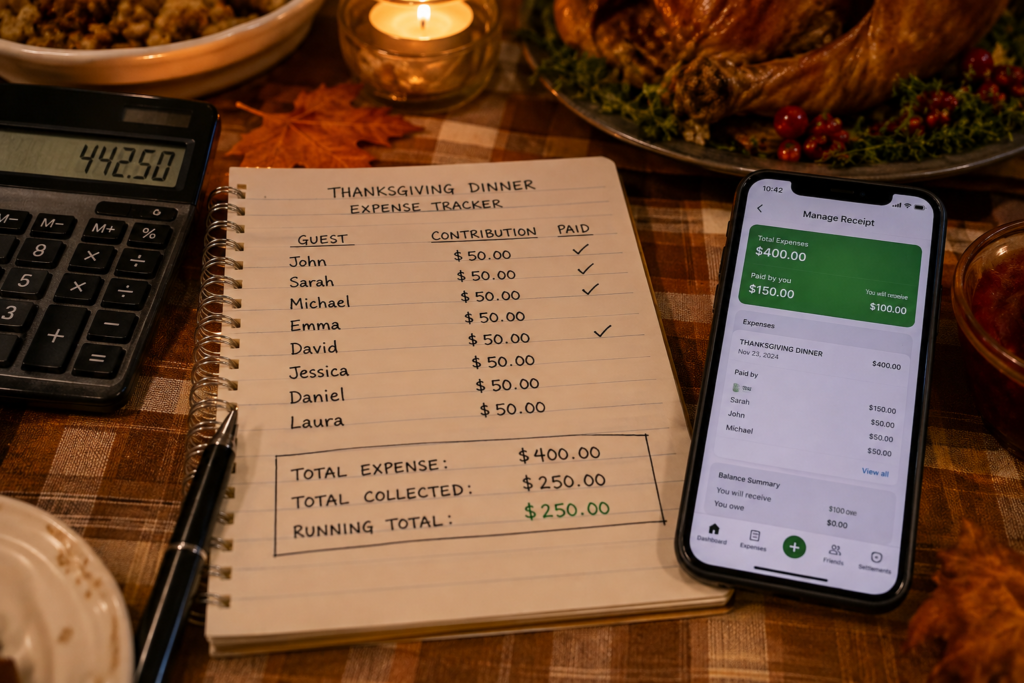
Once guests start contributing to split thanksgiving costs, you need a system to track who paid what. This prevents confusion and ensures fairness.
Use a spreadsheet:
Use an app:
Keep receipts:

Sometimes despite your best efforts to split thanksgiving costs fairly, someone doesn’t pay. This is awkward but fixable.
1. Assume it’s an oversight
Send a friendly reminder: “Hey! Just wanted to check in about the Thanksgiving contribution. Total was $120, so $15 per person if you’re able to help out.”
2. Give them an out
If they genuinely can’t afford it, let them know it’s okay: “No worries if money is tight. I appreciate you coming!”
3. Don’t make them feel bad
Never say: “I guess I’m paying for your meal.” Instead: “All good! Happy you could make it.”
4. Adjust future invitations
If someone consistently doesn’t contribute, adjust your expectations. They might be part of the group but won’t be helping financially.
5. Move forward
One unpaid contribution shouldn’t ruin the relationship. Let it go and set clearer expectations next time.
The goal of split thanksgiving costs isn’t to make money. It’s to share the burden fairly. If someone can’t pay, that’s okay. But most will help when asked directly.
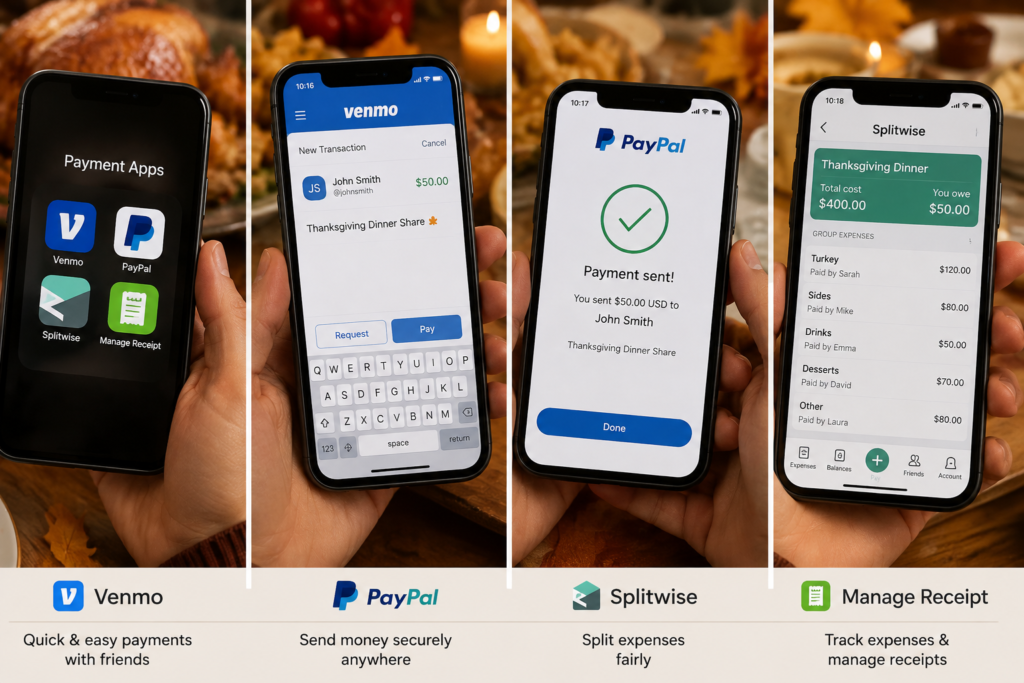
Gone are the days of cash and awkward handoffs. Technology makes it simple to split thanksgiving costs digitally, track everything, and avoid confusion.
Photograph each Thanksgiving receipt as you shop. The app stores them all in one place. When you ask guests to split thanksgiving costs, you can show them the breakdown. They see the turkey receipt ($28), the vegetables ($35), the wine ($40). Nobody questions the total when they see the actual receipts.

Whether you use a credit card or debit card, the real challenge is organizing proof.
Manage Receipt helps bridge that gap by ensuring every transaction has proper documentation.
With Manage Receipt, you can:
Capture receipts instantly to prevent loss
Store all receipts in one centralized system
Access proof quickly for approvals and audits
Improve visibility into spending
Reduce manual work and admin overhead
The biggest benefit of using ManageReceipt isn’t just the time you save. It’s the money you keep — because every receipt you capture is a deduction you can actually claim.
Try ManageReceipt free today — available on iOS and Android. No credit card required.
Click Here to know more about how Manage Receipt helps small businesses.

Splitting thanksgiving costs doesn’t have to create conflict. When you’re honest about expenses, ask guests directly, and track payments fairly, most people are happy to help.
The key is communication. Tell people the actual cost. Show them where the money goes. Make it easy to contribute. Track payments. Thank them.
This approach transforms Thanksgiving from a financial burden into a shared celebration. Guests feel good about helping. You feel good about the support. Everyone enjoys the meal without resentment.
Start planning now. Calculate your total. Decide how to split thanksgiving costs fairly. Ask guests early. Track contributions. Thanksgiving will be delicious — and financially stress-free.

Every tool on this list helps you run your business better. But none of them matter if your financial records are a mess.
Before you invest in project management software, marketing tools, or e-commerce platforms — make sure your expense tracking is airtight. Every purchase you make for your business needs to be documented, categorised, and stored correctly. Not just for tax season, but for understanding whether your business is actually profitable.
That is exactly what ManageReceipt is built for. Scan a receipt in seconds, add the business purpose, and it is stored, backed up, and export-ready. No shoebox of crumpled paper. No scrambling at tax time.
Download ManageReceipt Free — Start Tracking Expenses Today
iOS & Android | managereceipt.com


© 2025 Manage Receipt. All Rights Reserved.
